
Transposition Physiology: The Importance of Effective Blood Flow by M. Cory | OPENPediatrics Scholar
This video offers an overview of transposition physiology with a focus on the importance of effective blood flow. It reviews levels of mixing, the critical role of the atrial septum, challenges associated with a restrictive atrial septum, and the initial medical management of affected newborns. LEARNING OBJECTIVES - Describe the importance of effective blood flow in transposition physiology - Calculate the volume of mixing in a patient with transposition physiology - Compare the effectiveness of the different levels of mixing in a heart with transposition physiology - Identify the signs of a restrictive atrial septum in a patient with transposition physiology AUTHOR Melinda Cory, MD Assistant Professor of Pediatrics, UT Southwestern Medical Center DATE March 19, 2026. Please visit: www.openpediatrics.org OPENPediatrics™ is an interactive digital learning platform for healthcare clinicians sponsored by Boston Children's Hospital and in collaboration with the World Federation of Pediatric Intensive and Critical Care Societies. It is designed to promote the exchange of knowledge between healthcare providers around the world caring for critically ill children in all resource settings. The content includes internationally recognized experts teaching the full range of topics on the care of critically ill children. All content is peer-reviewed and open-access, thus at no expense to the user. For further information on how to enroll, please email: openpediatrics@childrens.harvard.edu Please note: OPENPediatrics does not support or control any related videos in the sidebar; these are placed by YouTube. We apologize for any inconvenience this may cause. CITATION Cory MJ. Transposition Physiology: The Importance of Effective Blood Flow. 03/2026. OPENPediatrics Scholar. Online Video: https://youtu.be/0BTyPRPdADA.
Suggested videos

Pediatric Septic Shock by J. O'Hara and K. Madden | OPENPediatrics
OPENPediatrics · 14:15
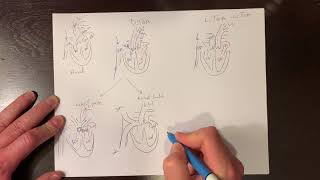
Transposition of the great arteries. A brief introduction
Maan Jokhadar, MD · 11:14

Transposition of the Great Arteries and the Evolution of Adult Congenital Heart Disease
UWDeptMedicine · 47:10

Bronchiolitis by A. Growdon | OPENPediatrics
OPENPediatrics · 10:34

TRANSPOSITION OF THE GREAT ARTERIES PART 2
Congenital Heart Academy · 3:00:09
Bradycardia in the Newborn by M. Freed | OPENPediatrics
OPENPediatrics · 3:48

TRANSPOSITION OF THE GREAT ARTERIES: UPDATE 2020.
Congenital Heart Academy · 3:16:45

Developmental Milestones by H. Hodges, B. Shagrin | OPENPediatrics
OPENPediatrics · 12:08

Prof. Meryl Cohen Series
Congenital Heart Academy · 1:11:16

Newborn Exam by N. Gold | OPENPediatrics
OPENPediatrics · 16:41

Medically Speaking: ACHD: Complete Transposition of the Great Arteries, Angeline DeGracia Opina, MD
Texas Children’s · 17:17

Asthma by J. Pian, L. Chiel, L. Rubin, A. Erickson | OPENPediatrics
OPENPediatrics · 12:38