
Range of Motion Exercises for CNAs | Upper & Lower Extremities with Nurse Eunice
Range-of-motion exercises help maintain joint movement and flexibility. They may reduce stiffness and help residents maintain mobility for everyday activities. Passive range of motion means the caregiver gently moves a resident's joint when the resident cannot perform the movement independently. IMPORTANT CNA RANGE-OF-MOTION STEPS 1. Review the resident's care plan. Identify which extremity and joints require exercise and how many repetitions are ordered. 2. Perform hand hygiene, introduce yourself, explain the procedure, and provide privacy. 3. Position the resident comfortably while maintaining proper body alignment. 4. Expose only the extremity being exercised and keep the rest of the resident covered. 5. Support the extremity above and below the joint being moved. 6. Move the joint slowly, smoothly, and gently through its allowed range of motion. 7. Never force a joint or push through pain or resistance. 8. Complete the prescribed number of repetitions for each movement. 9. Ask the resident about pain or discomfort and observe for stiffness, swelling, or limited movement. 10. Return the extremity to a comfortable, supported position. 11. Make sure the resident is safe, comfortable, and has the call light within reach. 12. Report unusual findings to the nurse and document the exercises according to facility procedures. UPPER-EXTREMITY EXERCISES Depending on the care plan, exercises may involve: • Shoulder flexion and extension. • Shoulder abduction and adduction. • Elbow flexion and extension. • Wrist flexion and extension. • Finger movements. LOWER-EXTREMITY EXERCISES Depending on the care plan, exercises may involve: • Hip and knee flexion and extension. • Hip abduction and adduction. • Ankle dorsiflexion and plantar flexion. Remember: Only perform the exercises authorized in the resident's care plan and within your training. COMMON CNA RANGE-OF-MOTION MISTAKES • Forgetting to review the care plan. • Exercising the wrong extremity. • Moving the joint too quickly. • Failing to support the extremity properly. • Pulling on the resident's hand or foot. • Forcing the joint beyond its comfortable range. • Completing the wrong number of repetitions. • Ignoring pain or resistance. • Forgetting to report unusual findings. • Leaving the resident uncovered or uncomfortable. NURSE EUNICE'S SKILLS LAB TIP Remember three important things: SUPPORT, MOVE SLOWLY, and NEVER FORCE! Your goal is not to see how far you can move someone's arm or leg. Your goal is to maintain comfortable joint movement while protecting the resident from injury. WHAT SHOULD YOU REPORT TO THE NURSE? • New pain during movement. • Swelling or redness around a joint. • Unusual stiffness or resistance. • Decreased ability to move an extremity. • Changes in the resident's usual range of motion. • Any other unusual findings during the exercise. READY TO PREPARE FOR YOUR CNA EXAM? Florida Training Academy offers online CNA exam preparation and in-person CNA training options in Jacksonville, Florida. Our online CNA Exam Prep Course is available for $29.99 per month and includes study materials, clinical skills videos, and practice questions. Explore CNA classes: https://www.FLtraining.com SHOP CNA SKILLS KITS AND SUPPLIES Need supplies to practice your CNA skills? Visit our Amazon storefront: https://www.amazon.com/shop/floridatrainingacademy JOIN THE CNA CLINICAL SKILLS LAB! Like this video if it helped you. Share it with someone preparing for the CNA exam. Subscribe to Florida Training Academy for more nursing assistant skills demonstrations with Nurse Eunice. QUESTION FOR THE COMMENTS: What changes would you report to the nurse while performing range-of-motion exercises? Your next career move starts with a skill! #RangeOfMotion #CNASkills #CNAExamPrep #NurseEunice #EuniceMathis #FloridaTrainingAcademy
Suggested videos
🩺 All CNA Skills | Step-by-Step CNA Skills Review with Nurse Eunice (for ALL States)
Florida Training Academy · 2:49:54
BEST CNA Practice Test 2026 | 100 CNA Exam Questions & Answers with Nurse Eunice
Florida Training Academy · 2:10:11
📚 100 CNA Practice Questions: Ready, Set, Review! 🩺
Florida Training Academy · 1:59:14
📚 Medical Terminology Made Easy with Nurse Eunice!
Florida Training Academy · 36:24
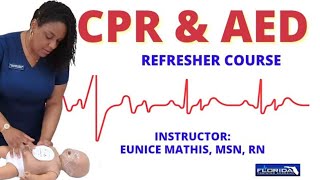
CPR & AED Refresher Course with Nurse Eunice [Adult, Child, and Infant]
Florida Training Academy · 22:11
Late Night CNA Study Session with Nurse Eunice | Practice Questions & Exam Tips
Florida Training Academy · 58:12

🩸Phlebotomy Certification Practice Test – 50 Questions to Help You PASS!
Florida Training Academy · 1:26:28
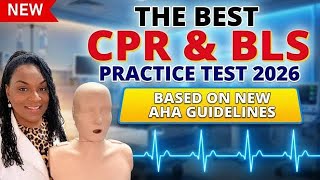
2026 CPR & BLS Practice Test | 50 Questions with Nurse Eunice
Florida Training Academy · 55:38