
Vieques tackles overpopulation of famous horses
(17 Jan 2017) Officials in the Puerto Rican island of Vieques are waging an unusual fight to control a tourist attraction that's become something close to a plague on the island, best known as the site of a former US military bombing range. The tiny island is immensely popular among tourists, as visitors flock to its famed for bright turquoise waters, lush mangrove forests and picturesque free-roaming horses. In an empty lot near the 500 US dollar-a-night W Retreat & Spa, a man with a gun is stalking some of the wild mares the island is famous for. He slowly walks toward a group of brown and white horses, raises a pistol and fires. A brown mare kicks her hind legs and sprints away. Richard LaDez, director of security for The Humane Society of the United States, picks up a contraceptive dart that fell from the horse's rump and gives a thumbs up to this team. First imported by Spanish colonists, horses are used by many of Vieques' 9,000-odd residents for running errands, taking children to school, transporting fishermen to their boats, competing in informal races between teenage boys and delivering late-night drinkers back home. They're adored by tourists, who love taking pictures of them eating mangos and frolicking on the beaches. Many locals keep their horses in open fields near the sea, where they graze until they're needed next. Feeding and sheltering a confined horse on an island with a median income of less than 20,000 US dollars a year is out of reach for many. Some horses are branded, many are not and a few just run wild. Officials say that as a result, it's nearly impossible to control the horse population and hold owners accountable when trouble occurs. The population has grown to an estimated 2,000 animals that break water pipes to quench their thirst, knock over garbage cans in search of food and die in car crashes that have increased as tourists flock to Vieques, which grew in popularity after the US Navy shuttered military operations in the early 2000s. Desperate, Vieques mayor Victor Emeric called the Humane Society, which agreed to launch a five-year programme of dispatching teams to the island armed with compressed-air rifles, pistols and hundreds of darts loaded with the animal contraceptive PZP. The programme began in November and picked up speed with a two-day push by about a dozen volunteers and Humane Society employees over the Martin Luther King Day weekend. More than 160 mares have been darted and Humane Society officials say they expect to inject virtually all the island's mares with contraceptives by the end of the year. The programme will cost up to 200,000 US dollars a year to run and is funded entirely through donations. Find out more about AP Archive: http://www.aparchive.com/HowWeWork Twitter: https://twitter.com/AP_Archive Facebook: https://www.facebook.com/APArchives Instagram: https://www.instagram.com/APNews/ You can license this story through AP Archive: http://www.aparchive.com/metadata/youtube/f7238f6ab6aa1f0875ed7f76e590eb2f
Suggested videos
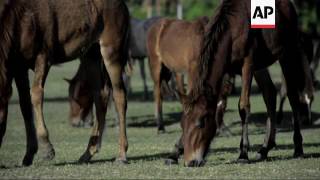
Vieques tackles overpopulation of famous horses
AP Archive · 3:43

WRAP Troops fighting in Fallujah, tanks, helicopters
AP Archive · 3:28
Wild horses on Vieques Island, Puerto Rico
Carla B · 0:33

News Item (6b370068-7b94-5a0e-1ded-9d1490d2ec32)
AP Archive · 2:11
Horses of The Island of Vieques, Puerto Rico - The Island of Wild Horses
LoneStarWoman Equestrian · 9:43

Welcome to AP Archive
AP Archive · 1:04

G21038813
AP Archive · 1:21
Wild Horse of Vieques Love to Eat Mangoes and Play on the Beach
TVvieques · 2:22

Today In History 1106
AP Archive · 1:20
Wild horses Vieques island
M BP · 0:24

RUSHES: Jacob Anderson, Sam Reid brace for 'anxiety' of 'Interview with the Vampire' season 2
AP Archive · 28:12
Vieques Horses 2
Jim Tade · 0:29