
Samsung (SSNLF) Q3 Earnings: The Chipflation Paradox Deconstructing Samsung's Q3 Earnings
Samsung Electronics just made history with a record-shattering 107.4 trillion won operating profit—yet institutional investors immediately initiated an aggressive sell-off. Behind the headline-grabbing 783% year-over-year surge lies an intense internal tug-of-war tearing through the company's balance sheet. While soaring HBM4 memory demand is generating historic cash flows, Samsung’s consumer tech empire is suffering from an acute "chipflation paradox," foundry execution hurdles in Taylor, Texas, and looming fears of an AI infrastructure capex peak. In this comprehensive breakdown, we dissect the consolidated financial statements, balance sheet solvency, capital return programs, and intrinsic valuation multiples to answer the critical question: is Samsung a generational AI bargain or a dangerous cyclical value trap? **Timestamps:** 00:00 - Record Q3 Earnings vs. The Immediate Sell-Off 00:50 - Samsung's Core Moat: HBM4 Memory & Division Breakdown 01:42 - Execution Risks: 2nm/4nm Foundry Yields & FX Volatility 02:26 - The "Chipflation" Paradox: Cannibalizing Consumer Margins 03:12 - Consolidated Financials: 55% Operating Margins & Debt Solvency 04:12 - Capital Allocation: 30T Won Dividend & Massive Share Buybacks 04:41 - The Valuation Penalty: Visible Alpha Miss & Capex Peak Fears 05:50 - Valuation Model & 12-Month Target Price (Final Verdict) 06:36 - Pure-Play Alternatives: SK Hynix & Emerging Threats (CXMT) 07:18 - Final Synthesis & Community Discussion **Key Takeaways & Financial Analysis:** * **The Competitive Moat:** Samsung’s semiconductor division (Device Solutions) functions as the primary profit engine, generating 14.71 trillion won in operating profit driven by commanding pricing power and dominance in next-generation HBM4 memory chips, complemented by resilient OLED display panel sales (8 trillion won). * **Operational & Macro Risks:** Foundry fabrication yields on 4nm and 2nm nodes at the Taylor, Texas facility represent severe execution bottlenecks. Unfavorable foreign exchange rates shaved 10 trillion won off operating profits this quarter. Furthermore, surging internal component costs forced the mobile and home appliance divisions into an 800 billion won operating loss, while an 84.4 trillion won capex commitment leaves Samsung vulnerable if hyperscalers taper data center buildouts. * **Financials & Solvency Metrics:** Consolidated Q3 revenue hit 195.3 trillion won (+127% YoY) with a 69.3% gross margin and 55% operating margin. Earnings per share expanded by 536% with a 57% ROE. A rock-solid asset-to-equity ratio of 1.29 provides the balance sheet flexibility needed to deploy a 30 trillion won dividend alongside a 55–75 trillion won share repurchase and cancellation program. * **Valuation & Verdict:** Despite institutional multiple compression following a slight miss against Visible Alpha estimates, the stock remains undervalued relative to its cash-generation capability. Applying a conservative 15x multiple to annualized Q3 earnings per share yields a 12-month target price of roughly 687,000 won per share, supporting a definitive **Buy** rating. **Call to Action:** Do you believe the AI memory supercycle has significant room left to run, or is a pure-play memory maker like SK Hynix a safer vehicle for this cycle? Share your perspective in the comments below. If you appreciate data-driven financial breakdowns that cut through Wall Street noise, hit the subscribe button and let us know which earnings release we should analyze next! --- #Samsung #StockAnalysis #Semiconductors #HBM4 #TechStocks #Investing #EarningsReport #SKHynix #FinancialAnalysis
Suggested videos

Forbidden Samsung S90H Amazon Review Revealed!
QUANTUM TV · 13:33

Apple Q4 Earnings (APPL) : Impenetrable Tech Fortress | Deep-Dive Financial Analysis
MrBigEasyFinanceAI · 9:32

Samsung Galaxy Z Roll FIRST LOOK - iPhone Duo is finished.
TechDroider · 3:56

Oklo ($OKLO) Q3 Earnings: Generational AI Energy Play or $4 Billion Value Trap? | Equity Analysis
MrBigEasyFinanceAI · 8:26

Galaxy S27 Pro vs Ultra - Samsung Learned Nothing
TechTalkTV · 4:42

ASML: Flawless AI Monopoly | Equity Deep Dive
MrBigEasyFinanceAI · 6:44

New Upgrade - Samsung Phone App gets Big BOOST !
AppX · 4:37

Rocket Lab ($RKLB) Q3 Earnings: Future Player In the Space Industry?
MrBigEasyFinanceAI · 8:20

Samsung Z Fold 8 (Wide) Impressions: Better Than I Thought!
Marques Brownlee · 9:23
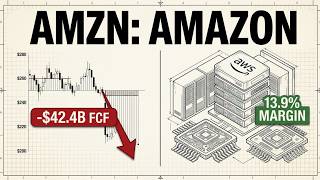
Amazon (AMZN) Q3 Post-Earnings Plunge: Undervalued Moat or Dangerous Cash Drain?
MrBigEasyFinanceAI · 6:28

All-new Unfolds | Galaxy Z Fold8 Ultra and Fold8 | Samsung
Samsung · 0:35

Introducing Galaxy Tab S12 Ultra | Samsung
Samsung · 2:16