
Video unavailable
This video can't be played right now.
France Re-Defines Rape: Consent = Law | Why India Needs This Shift #trending #education #gk #news
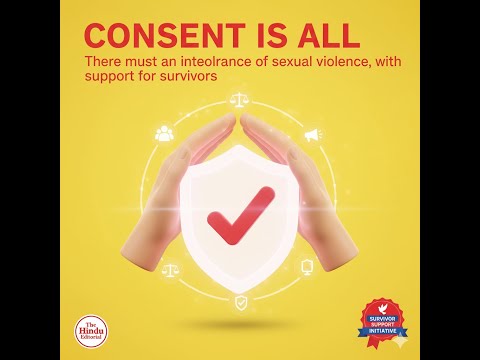
France just declared rape = ANY non-consensual sexual act. This is a revolution in sexual autonomy law. In India conviction rates still hover 27-28% (NCRB). Why? Patriarchy. Stigma. Burden of injury proof. This analysis explains what changed, why it matters, and how India must respond. Consent is NOT a “grey area”. Consent is a YES — clearly, freely, consciously. This EU-moment in France is not just a law — it is a structural shift in understanding sexual autonomy. Background France has now legally codified — rape = ANY non-consensual sexual act. — this is now statutory — not interpretative. The case of Gisèle Pelicot triggered a legal & cultural earthquake: → she revealed she was drugged, raped, filmed → court: 51 convictions → public → demands to PUT CONSENT inside law Main News core France re-defined sexual crime from injury-based proof → consent-based recognition NCRB India: conviction rates only 27-28% (2018-2022) patriarchal victim-blame remains dominant Section 129 BNS recognises “criminal force” but emotional / social / police culture ≠ aligned Analysis India is still in “evidence-of-injury” mindset. France has moved to “absence-of-consent” mindset. This is the difference between: crime = violence vs crime = violation of autonomy Conclusion / Solutions → Police need trauma-informed SOPs → School civics must include consent literacy → Judges, Investigators need gender-neutral / survivor-sensitive training → Govt needs zero-tolerance messaging → Free legal & mental-health support system must be public mandate Imagine a country where a woman must PROVE her pain — to prove rape. Now imagine another country saying — proof of non-consent is enough. That is the difference France just codified. This is not a feminist win — this is a CIVILISATION win. MAINS QUESTIONS To what extent can consent-based definition of rape reshape the burden of proof in India? How do patriarchal community norms affect adjudication even AFTER law reforms? Evaluate whether India requires specialised sexual-offences courts separate from IPC/BNS general trial streams. MCQs with explanations Q1 NCRB conviction rate for rape in India (2018-22 avg): A) 27-28% B) 55-60% C) 72-75% D) 90% Ans: A → editorial quoted 27-28%. others nowhere near NCRB. Q2 France’s recent reform primarily reinforced: A) injury-based forensic standard B) consent-based legal foundation C) new DNA evidentiary threshold D) only marital rape provisions Ans: B → exactly editorial core. Q3 Section 129 BNS refers to: A) criminal force B) custodial death C) sedition D) money laundering Ans: A → editorial mentions Section 129 BNS recognises criminal force. Q4 The editorial implies that prevention must begin with: A) university only B) early awareness & school level C) prison reforms D) international treaties only Ans: B → editorial says “begin early”. Q5 Which of the following is implied as barrier in India? A) survivor stigma B) high conviction C) low public attention D) zero victim-blame Ans: A → direct line in editorial about stigma + blame. #ConsentLaw #FranceConsentLaw #upsceditorial #SexualAutonomy #CriminalLawReform #teachtrick #indianjudiciary #genderjustice #trending #upsc2025 #education #currentaffairs #upsc
Suggested videos

France set to include consent in legal definition of rape
Arirang News · 0:57

U6 W3 D2 Teach Trick Words Reading
Athina Lewis · 2:45

U7 W2 D2 Teach Trick Words Reading
Athina Lewis · 2:16

France Overhauls Rape Law: 'Only Yes Means Yes' Set To Become Legal Rule
India Today Global · 2:49

U7 W3 D2 Teach Trick Words
Athina Lewis · 6:50

French MPs give final passage to bill outlawing sexual harassment on street
AP Archive · 5:07

What is Teach Trick?
Teach trick · 0:37

Japan: New legislation redefines rape, raises age of consent • FRANCE 24 English
FRANCE 24 English · 11:05

U6 W2 D2 Teach Trick Words Reading
Athina Lewis · 2:53

Saphia (France) on the way French society deals with rape
Mapping Violence Project · 2:21

U7 W3 D4 Teach Trick Words
Athina Lewis · 2:59

Consent in the law! - Sarah Legrain
La France insoumise à l'Assemblée nationale · 5:11