
1860s Kitchen Gadget? Starrett Food Chopper [Restoration]
Restoring a 160-year-old kitchen machine – the L.S. Starrett Food Chopper from the 1860s, one of the fascinating predecessors of today's food processors. I found this antique food chopper at a flea market in the Netherlands. The previous owner told me he had kept it for many years and that his father had repaired it at some point. Unfortunately, the original chopping bowl had been missing ever since. Despite its age, rust, missing parts, and previous repairs, I decided to bring this remarkable piece of kitchen history back to life. A little history The L.S. Starrett Food Chopper was invented by Laroy Sunderland Starrett in Massachusetts, USA, and patented on May 23, 1865. Also known as the "Hasher," this ingenious hand-operated machine was designed to chop meat, vegetables, and other foods. Its mechanical system uses gears and a crank to move a chopping blade up and down while gradually rotating the bowl. It was one of Laroy S. Starrett's earliest inventions, long before his name became associated with precision measuring tools. More than 160 years later, its clever mechanical design is still impressive. The restoration process After completely disassembling the chopper, I discovered several problems that were not immediately visible. One of the cast-iron legs was broken, and the cast-iron base of the chopping bowl was cracked, with a missing section that someone had previously replaced with a handmade piece. I carefully cleaned and welded the damaged cast-iron components, then ground and finished the repaired areas to bring them as close as possible to their original appearance. One of the biggest challenges was recreating the missing chopping bowl. I started by making a new wooden bottom, finishing it with natural wax and countertop oil. For the bowl itself, I used 0.8 mm aluminum sheet, which I carefully bent, cut, and shaped to match the original cast-iron base. To protect the inside of the aluminum bowl, I applied a thin layer of linseed oil and heated it in the oven at 250°C for three hours to create a seasoned protective finish intended for food contact. The broken leg was welded and finished before the metal components were sandblasted and powder-coated in RAL 6020, a shade I selected because it closely resembles the original color. The old wooden base was beyond repair, so I made a new one from pine wood and protected it with marine varnish. I also cleaned and nickel-electroplated the smaller metal components, sharpened and polished the damaged chopping blade, and machined a new shaft on the lathe to replace an incorrect screw installed during an earlier repair. Finally, I cleaned and treated the wooden handle with countertop oil and restored the spring steel strip responsible for lifting the operating lever. After many hours of cutting, welding, grinding, machining, painting, and careful assembly, this incredible 19th-century kitchen machine is finally back together. My goal was not just to make it look beautiful again, but to preserve as much of its original character and history as possible. If you enjoyed this restoration, please give the video a thumbs up, leave a comment, and subscribe to Restoration Road for more antique restorations and forgotten mechanical treasures. 👉 Subscribe & Stay Connected: https://www.youtube.com/channel/UCyb1fq60w6JgYOzfdIpIE7Q?sub_confirmation=1 Thank you for being on Restoration Road! #Restoration #AntiqueRestoration #FoodChopper #Starrett #VintageRestoration #KitchenGadget #MetalRestoration #RestorationRoad #1860s #FoodProcessor
Suggested videos
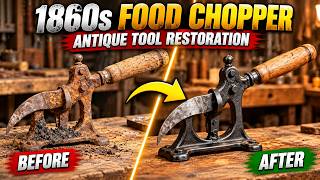
1860s Kitchen Gadget? Starrett Food Chopper Restoration | Antique Tool Revival
Expo Restoration · 12:01
Restoration Road - Official Trailer | Magnolia Network
Magnolia Network · 1:00
1860s Kitchen Gadget Starrett Food Chopper #restoration
lvfarmtracctor · 4:09

Restoration Road with Clint Harp Season 2 - Official Trailer | Magnolia Network
Magnolia Network · 1:12

1860s Starrett Food Chopper [Restoration]
Hand Tool Rescue · 27:22
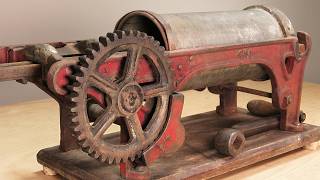
1935 ELMA Sausage Stuffer – From Rust to Thüringer Bratwurst!
Restoration Road · 27:46
1860s Kitchen Gadget Starrett Food Chopper 2.#restoration
lvfarmtracctor · 3:27

Restoring Abandoned Cookie Machinery | 1920s SPECULAAS Roller TRANSFORMATION
Restoration Road · 29:11
L.S. Starrett 1860's Antique "Hasher" - Rare Restuarant Version - 12" Drum
ValueForValue1965 · 2:30

What Really Happened to Clint Harp from Fixer Upper? Heartbreaking Details Revealed
HGTV News & Updates · 4:27
I restored an extremely rare 1860s L.S. Starrett mechanical food chopper!
Restauration_ASMR · 5:54

Kevin Durkin on "Restoration Road"
Kevin Durkin · 3:36