
Blue Dream: The California Strain That Ruled America Without a Name Behind It
Blue Dream is the best-selling cannabis strain in American history, and this video is about the strange fact that nobody knows who created it. It traces the mystery back to Santa Cruz, California in the early two thousands, walks through the two failed magazine investigations that tried to name its breeder, explains its famous Blueberry and Haze parents, and shows how an anonymous clone with no owner went on to outsell every hyped strain in the country. It is honest throughout about which origin claims hold up and which do not, and about why a strain the connoisseurs called boring is still the number one seller in America today.What's covered in this video: Why Blue Dream stands out as an orphan strain, when strains like Girl Scout Cookies, Sour Diesel, and Zkittlez all have known breeders like Berner, the Cookie Fam, AJ, and the Terp Hogz crew. How Blue Dream first appeared around two thousand three in Santa Cruz, a weed-growing pocket south of San Francisco, spreading through the medical dispensaries made legal by California's Proposition two hundred fifteen and the Compassionate Use Act of nineteen ninety-six. What a clone-only strain is, and why the fact that Blue Dream was never sold as seeds is the reason its creator can never be proven. The two thousand twenty-one investigation by Leafly writer Ellen Holland, whose leads to the WAMM collective and the growers above Bonny Doon all hit dead ends. The two thousand twenty-three follow-up hunt by High Times writer Mitchell Colbert, who also failed to find the breeder. The strain's famous parents, including Blueberry from DJ Short, the Detroit breeder called the Willy Wonka of weed, and its later spread through Dutch Passion Seeds. The history of the Haze parent, its landrace roots in Santa Cruz greenhouses, its path to Amsterdam through Sam the Skunkman, and the truth that the Haze Brothers name came from New Jersey smugglers. The disputed origin claims, including later seed recreations from Mystic Seeds and Humboldt Seed Organization, and why DJ Short himself had to recreate the cross as Azure Haze. Why Blue Dream was perfect for the legal weed boom, with fast eight-to-ten-week growth, mold resistance, two-pound yields, and clones selling for as little as five dollars. The strain's profile, including its sativa-leaning high, its blueberry muffin flavor, terpenes like myrcene, and THC in the high teens to low twenties. How Blue Dream became the top seller in America, ranking number one in both Colorado and Washington in twenty fifteen and selling nearly forty-nine million dollars across three states in twenty sixteen, roughly double the number two strain, Gorilla Glue number four. The backlash that branded it boring, beginner weed and the vanilla of weed, worsened by lazy growers and fake Blue Dream flooding shops. Its comeback as America's sweetheart strain, staying the number one seller on Leafly for three years running and the top flower in California in twenty twenty-five per Headset data. Its cultural mark, including Juicy J's twenty eleven mixtape Blue Dream and Lean, and its descendants like Blue Cookies, Double Dream, and Dream Queen. Mentioned in this video: Blue Dream, Girl Scout Cookies, Berner, the Cookie Fam, Sour Diesel, AJ, Zkittlez, Terp Hogz, Santa Cruz, San Francisco, California, Proposition 215, Compassionate Use Act of 1996, Ellen Holland, Leafly, WAMM, Women's and Men's Alliance for Medical Marijuana, Bonny Doon, Mitchell Colbert, High Times, Blueberry, Haze, DJ Short, Detroit, Dutch Passion Seeds, Sam the Skunkman, Amsterdam, Haze Brothers, New Jersey, Mystic Seeds, Humboldt Seed Organization, Santa Cruz Naturals, Azure Haze, Gelato, Runtz, Colorado, Washington, Oregon, Gorilla Glue number four, Headset, Juicy J, Blue Dream and Lean, Blue Cookies, Double Dream, Dream Queen.
Suggested videos
Blue Dream Strain - Everything You Need to Know | Strain Review Four
CBD Headquarters · 1:30
Khalifa Kush: The Strain That Was Never Meant To Be Public
HighGradeHub · 10:45
Blue Dream Strain: The Untold History of America's #1 Weed
Cannabis Lore · 6:35
G13: The Strain That Was Stolen From A Secret Government Lab
HighGradeHub · 13:30
Blue Dream Strain Information / Review
World According To Evan (Vegas Cannabis) · 2:44
Mendo Breath: The Strain That Started The “Breath” Family
HighGradeHub · 16:27
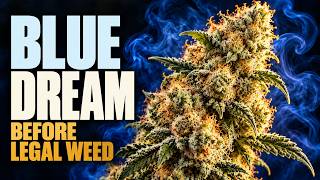
Blue Dream: The Strain That Ruled California Before Legal Weed
Strain History · 19:16

Lebanese Red: The Middle East’s Most Famous Hash
HighGradeHub · 19:02

BLUE DREAM - You cant beat the taste - documentary 2015
Cali Green · 21:06
Skywalker OG: The Strain Even the Heaviest Smokers Were Afraid Of
HighGradeHub · 8:33

The Origins of Blue Dream
Brutal Monkey · 4:43
Ditch Weed: The American Strain That Refuses To Go Away
HighGradeHub · 20:30