

Video unavailable
This video can't be played right now.
Uric Acid Is the Receipt Fructose Leaves Behind
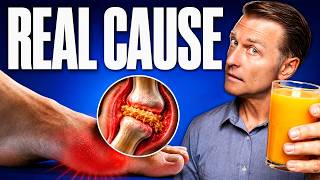
Gout pain begins when urate crystals trigger inflammation inside a joint. But the crystal is the final scene. What caused uric acid to accumulate in the first place? This episode of The Fructose Model follows the story upstream, from the painful joint to a rapid energy transaction inside the cell. In a randomized human trial, fructose-containing drinks raised blood uric acid within thirty to sixty minutes compared with glucose. Another six-month trial found that regular cola increased uric acid by about fifteen percent, while diet cola, milk, and water did not produce the same change. The mechanism helps explain why. Fructokinase traps fructose inside the cell by rapidly spending ATP, the cell’s immediately available energy. When ATP depletion outpaces recovery, purines are broken down and uric acid is produced. Fructose enters. ATP is spent. Uric acid is left behind. That is why uric acid can be viewed as a metabolic receipt. It doesn’t reveal the entire transaction, and elevated uric acid does not prove that someone consumed fructose. Kidney clearance, genetics, dehydration, alcohol, medications, and internally produced fructose can all affect the result. Food structure matters too. Controlled trials suggest that sugar-sweetened beverages have a clearer effect on uric acid than many other fructose-containing foods. Whole fruit and soft drinks are not metabolically interchangeable simply because both contain fructose. The gout attack may happen in the toe. The process that filled the uric-acid pool began much farther upstream. Subscribe for more episodes exploring fructose metabolism, cellular energy, uric acid, and the biological survival response. Research discussed: Carran EL, et al. Acute effect of fructose intake from sugar-sweetened beverages on plasma uric acid: a randomised controlled trial. European Journal of Clinical Nutrition. 2016. https://pubmed.ncbi.nlm.nih.gov/27329612/ Bruun JM, et al. Consumption of sucrose-sweetened soft drinks increases plasma levels of uric acid in overweight and obese subjects: a 6-month randomised controlled trial. European Journal of Clinical Nutrition. 2015. https://pubmed.ncbi.nlm.nih.gov/26081486/ Choi JWJ, et al. Sugar-sweetened soft drinks, diet soft drinks, and serum uric acid level. Arthritis & Rheumatism. 2008. https://pubmed.ncbi.nlm.nih.gov/18163396/ Ayoub-Charette S, et al. Different food sources of fructose-containing sugars and fasting blood uric acid levels. The Journal of Nutrition. 2021. https://pubmed.ncbi.nlm.nih.gov/34087940/ Educational content only. Gout and elevated uric acid should be assessed with a qualified healthcare professional. #UricAcid #FructoseMetabolism #Gout 📌 This video is part of our ongoing series breaking down the framework step by step. Each episode explores one piece of how fructose metabolism shapes health and disease. 🔔 Subscribe to follow the full series: https://www.youtube.com/@thefructosemodel 🌐 Learn more at: https://liv3health.com ⚠️ Disclaimer: This content is for educational purposes only and does not provide medical advice. Always consult a qualified healthcare professional before making changes to your diet, lifestyle, or supplement use.
Suggested videos
Fructose and the Ancient Survival Pathway Driving Modern Metabolism with Chris Mearns
Access Labs · 34:38

TOP 5 Drinks to Reverse High URIC ACID & GOUT!
Michigan Foot Doctors · 9:23
Fructose vs Glucose: Same Sugar, Opposite Signals
The Fructose Model with Chris Mearns · 8:59
4 Ways to Neutralize Uric Acid
Dr. Eric Berg DC · 2:19
You Switched to Honey. What Actually Changed?
The Fructose Model with Chris Mearns · 6:23

Eat THIS to Improve Gout!
Dr. Boz [Annette Bosworth, MD] · 5:32

The Sugar Your Body Makes
The Fructose Model with Chris Mearns · 6:47
The #1 Best Protocol to Reverse Gout (& Prevent It)
Dr. Eric Berg DC · 8:34

Fructose, Fat Storage & Sugar Cravings with Chris Mearns
DrHaley · 1:01:26

The Ultimate Kidney Cleanse for Uric Acid and Gout: Dr. Berg's Proven Techniques
Dr. Eric Berg DC · 3:27

The Framework That Explains Chronic Disease | The Fructose Model 0.0
The Fructose Model with Chris Mearns · 6:17

How your uric acid levels could hold the key to optimizing your mental & physical health
Dr. Leaf Show: Neuroscience & Mental Health · 39:21