
Video unavailable
This video can't be played right now.
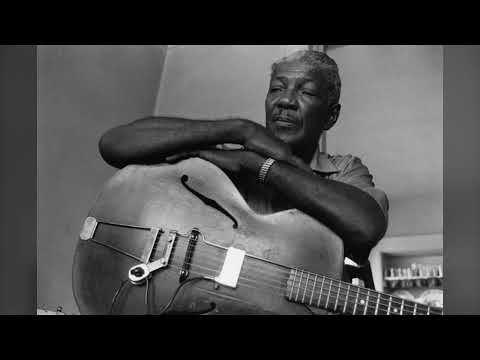
Johnny St Cyr Jelly Roll Blues April 2, 1949 Orleans Parish, Louisiana (Restored)
Photograph by Lee Friedlander, New Orleans 1958 John Alexander "Johnny" St. Cyr (April 17, 1890 – June 17, 1966) was a pioneering American jazz banjoist and guitarist whose rhythmic drive and instrument innovations helped shape the sound of early jazz. Early Life in New Orleans (1890–1923) • Musical Beginnings. Born John Alexander St. Cyr in New Orleans, Louisiana, he grew up in a musical family and taught himself to play guitar. By age 15, he was already leading his own small string trios. • Local Prominence. St. Cyr transitioned to the banjo to achieve greater volume in loud brass and reed ensembles. He quickly became a sought-after sideman, performing with premier New Orleans groups including the Superior, Olympia, and Tuxedo bands, as well as ensembles led by A.J. Piron and Kid Ory. • Riverboat Years. Before heading north, he spent several years playing aboard Mississippi River steamboats, such as the S.S. Capitol, with Fate Marable's and Charlie Creath's bands. The Chicago Years (1923–1929) • Joining King Oliver. In 1923, St. Cyr moved to Chicago to join King Oliver's Creole Jazz Band. His arrival placed him at the center of the burgeoning jazz recording industry. • Landmark Recordings. Throughout the mid-to-late 1920s, St. Cyr served as the rhythmic backbone for some of the most influential sessions in jazz history. He was a core member of Louis Armstrong's Hot Five and Hot Seven (1925–1928) and Jelly Roll Morton's Red Hot Peppers. He also performed regularly with Doc Cook's Dreamland Orchestra, Jimmie Noone, and Johnny Dodds. • Innovations & Compositions. St. Cyr popularized the six-string guitar-banjo—often attaching a guitar neck to a custom banjo body with an extra-large pot for added resonance. This hybrid allowed him to project over horns while using guitar chord voicings. He also composed several early jazz standards, including "Oriental Strut," "Buddy's Habit," "High Fever," and "Messin' Around". Return to New Orleans & Trade Work (1930–1954) • Leaving Full-Time Music. Following the onset of the Great Depression and layoffs in Chicago, St. Cyr returned to New Orleans in 1930. • Plasterer and Part-Time Musician. For the next two decades, he earned his primary living working as a plasterer. However, he remained active in the local music scene, playing part-time with New Orleans stalwarts like Paul Barbarin, Alphonse Picou, and George Lewis. • Rediscovery. During the late 1940s and early 1950s Dixieland revival, interest in St. Cyr's work surged. In 1949, folklorist Alan Lomax recorded extensive interviews and solo guitar pieces with him, and in 1954, St. Cyr finally made his first recordings as a bandleader. Final Years in California (1955–1966) • Full-Time Revival. Near retirement age in 1955, St. Cyr relocated to Los Angeles and returned to playing music full-time. He performed with various West Coast traditional jazz outfits, including the New Orleans Creole Jazz Band. • Disneyland Bandleader. From 1961 until his death, St. Cyr led the Young Men from New Orleans aboard the Mark Twain riverboat at Disneyland, bringing his career full circle back to riverboat performances. • Passing & Legacy. After surviving a serious car crash in 1965 and battling illness, St. Cyr died of leukemia in Los Angeles on June 17, 1966, at age 76. He was posthumously inducted into the American Banjo Museum Hall of Fame in 2002.
Suggested videos
Livin' The Blues
Sounds Of Blackness - Topic · 4:13
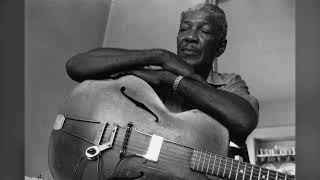
Johnny St Cyr Jelly Roll Blues Take 2 April 2, 1949 Orleans Parish, Louisiana (Restored)
LivinTheBlues · 2:57
Livin' the Blues
Shaun Murphy - Topic · 3:15
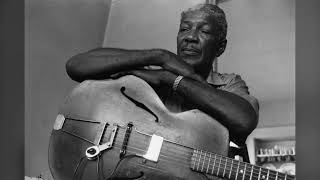
Johnny St Cyr Guitar Blues April 2, 1949 Orleans Parish, Louisiana (Restored)
LivinTheBlues · 1:49

Livin the Blues
In Confession Swe - Topic · 3:57
Johnny St Cyr C'était n'aut' can can, payez donc April 2, 1949 Orleans Parish, Louisiana (Restored)
LivinTheBlues · 0:33
Nighthawks - Livin' The Blues - Live on Don Odells Legends
Don Odell · 4:22
Jerry Brunner, Cyndi Craven and Tom Wolf - 'Livin' the Blues' orig. by Bob Dylan
beatlanta.com beatlanta.com · 2:25
Livin' The Blues
Sounds Of Blackness - Topic · 4:13
Livin' The Blues Organ Trio - Future Blues
Livin' The Blues · 3:41
Livin' the Blues
Marty Stokes - Topic · 4:43