
Functional Ultrasound Imaging in Pain and Pharmacology Research
To learn more, go to: https://insidescientific.com/webinar/functional-ultrasound-imaging-in-pain-and-pharmacology-research/ In this webinar, Dr. Sophie Pezet and Dr. Benjamin Vidal discuss methodology, applications and new possibilities enabled by functional ultrasound (fUS) imaging, with a focus on chronic pain and neuropharmacology research. Sophie Pezet, PhD: Functional Ultrasound Imaging: a novel approach for the study of pain mechanisms While acute pain is useful in alerting the body to noxious stimulation, chronic pain is always deleterious. Most chronic pain arises from abnormal neuronal plasticity due to a previous condition, such as peripheral inflammation (inflammatory pain) or a nerve lesion (neuropathic pain). Dr. Sophie Pezet illustrates the use of fUS to study the alterations of cerebral networks in two animal models of inflammatory pain. She also presents a recent study analyzing the vascularization of the spinal cord in rats, and re-evaluating a fundamental mechanism of acute pain and peripheral sensitization using neurovascular coupling in the spinal cord. These studies open the way for future pharmacological studies aiming at the development of new analgesic treatments. Benjamin Vidal, PharmD, PhD: Imaging acute effects of drugs in the brain using pharmaco-fUS in rodents Functional ultrasound (fUS) is a new neuroimaging technique able to follow changes in cerebral blood volume without any contrast agent at high spatiotemporal resolution. In this webinar, Dr. Benjamin Vidal presents different pharmaco-fUS experiments measuring the acute hemodynamic effects of drugs as a way to understand their regional and temporal impact on brain activity. Dr. Vidal also shows how pharmaco-fUS enables the direct measurement of changes in cerebral blood volume or functional connectivity, providing access to rich pharmacological information thanks to different analysis strategies. Key Topics Include: - Methodology of fUS and pharmaco-fUS experiments - How fUS compares to other neuroimaging techniques: sensitivity, versatility and current challenges - What is the feasibility of fUS in anaesthetized or awake animals, and how does it compare to other in vivo neuroimaging methods? - What information does fUS provide to address neurobiological questions and to understand drugs’ effects? - How does pharmaco-fUS differ from other fUS experiments (resting state or sensory stimulation/task-based paradigms)?
Suggested videos

Applications of Human Intestinal Organoid Cultures in Drug Discovery
InsideScientific · 1:00:51
Brian Mickey: Focused Ultrasound for Chronic Pain and Opioid Misuse
INTAM Network · 11:30
Cellular Brain Repair for Parkinson’s Disease: Is the Answer in the (Biomaterial) Matrix?
InsideScientific · 59:28
What is functional Ultrasoud?
Radiology19 · 3:02
What’s Next in Preclinical Cancer Immunotherapy Research?
InsideScientific · 35:01

Ultrasound Guided Pharmacology
FOAMfrat · 33:25

Advanced In Vitro Technologies to Investigate Therapeutic Impact on the Cancer Immunity Cycle
InsideScientific · 57:41

2025 PARC Neuromodulation Symposium - Part 2 of 2
UCSF Anesthesia · 2:28:43
A Human iPSC Line and Neural Progenitor Cells for Downstream Differentiation Applications
InsideScientific · 54:36
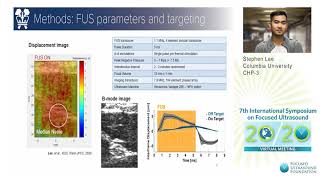
Stephen Lee - FUS-Induced Median Nerve Stimulation Alters Thermal Pain Sensation in Humans (2020)
Focused Ultrasound Foundation - Symposium Programs · 4:58
Industry Interview – Talking Neuroscience with Leonard Khiroug
InsideScientific · 9:51
Ultrasound-mediated Diagnosis and Treatment
TAUVOD · 5:01