
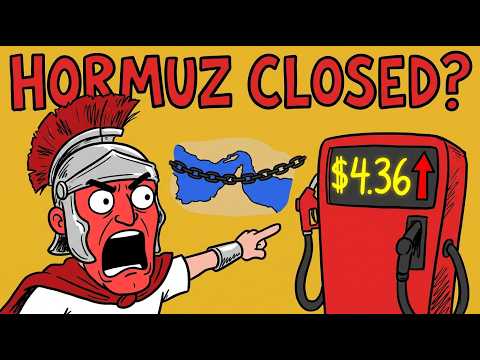
Video unavailable
This video can't be played right now.
What Happens If the Strait of Hormuz Stays Closed?
You pull up to the gas pump and watch the numbers climb. You blame the station, the oil companies, or whoever is in charge. But the real answer is far stranger. It begins half a world away, in a channel of water only 21 miles across. In this video, you'll discover why one-fifth of the world's oil squeezes through that single gap, why your gas stays expensive even after crude oil falls (the "rockets and feathers" effect), and how a fuel problem quietly becomes a grocery, inflation, and budget problem. You'll see what Federal Reserve Bank of Dallas economists modeled for a long closure, and why economist James Hamilton found that nearly every US recession since World War II was preceded by an oil price spike. Gas is only the part you can see. By the end, you'll know what you're really paying for every time you fill your tank. If this changed how you see the pump, hit the like button, leave a comment with the price you paid last week, and subscribe to PastLore for more stories about the hidden chains that run your life. #StraitOfHormuz #Hormuz #GasPrices #OilPrices #Inflation #Economy #EconomicsExplained #WhyIsGasSoExpensive #OilCrisis #RocketsAndFeathers #SupplyChain #CostOfLiving #Geopolitics #Doodle #AnimatedExplainer #HistoryAndEconomics #PastLore #Education
Suggested videos
What If the Strait of Hormuz Stayed Closed? Global Crisis Explained
Global Defense info · 4:07

چه کسانی واقعاً اهرام مصر را ساختند؟
PastLore · 13:07
What If the Strait of Hormuz Closed Forever?
Fred - Money Historian · 48:30

Angkor: The Empire That Water Couldn't Save
Past Lore · 1:19:56
Examining possible scenarios if Trump ends war in Iran and Strait of Hormuz stays closed
CBS News · 3:24

چرا چین بارها تجزیه شد اما هرگز نابود نشد؟
PastLore · 22:51
What Happens if Iran Blocks the Strait of Hormuz?
RealLifeLore · 16:59
۲۰ هزار پرنده علیه ارتش استرالیا! 😱 | عجیبترین جنگ تاریخ
PastLore · 22:28
Iran war: If Hormuz stays closed, the world will pay the price | DW News
DW News · 11:03
Göbekli Tepe: The Temple Older Than Civilization
Past Lore · 1:27:02
The Bronze Age Collapse: When Every Great Empire Fell at Once
Past Lore · 1:27:14
If Hormuz stays shut, who really wins? | DW News
DW News · 15:50