
Yamnaya in the Balkans - The Rise of the Vučedol Culture
Starting around 3200 BC, the Yamnaya began a series of migrations which would reshape the world. This is their lesser known journey south, into the Balkans, which would be the birthplace of one of the most important languages and cultures in the world. To support the channel and get ad-free videos, extra content, discussion, requests, etc, become a member of the channel on YouTube or on Patreon https://www.patreon.com/fortressoflugh You can also send me a SUPER THANKS, which is greatly appreciated OR Paypal donations (Greatly appreciated) https://paypal.me/FortressofLug?country.x=CA&locale.x=en_US You can find me on Facebook https://www.facebook.com/FortressofLugh Website https://www.fortressoflugh.com/ Sources used for this video: • Mathieson, I. et al. (2018). “The genomic history of southeastern Europe.” Nature. https://www.nature.com/articles/nature25778 • Penske, S. et al. (2023). “Early contact between late farming and pastoralist societies in southeastern Europe.” Nature. https://www.nature.com/articles/s41586-023-06334-8 • Lazaridis, I. et al. (2022). “The genetic history of the Southern Arc: A bridge between West Asia and Europe.” Science. https://pmc.ncbi.nlm.nih.gov/articles/PMC10064553/ • Lazaridis, I. et al. (2025). “The genetic origin of the Indo-Europeans.” Nature. https://doi.org/10.1038/s41586-024-08531-5 • Freilich, S. et al. (2021). “Reconstructing genetic histories and social organisation in Neolithic and Bronze Age Croatia.” Scientific Reports. https://doi.org/10.1038/s41598-021-94932-9 • Ivanova, S. & Kiosak, D. (2023). “Modelling Yamna distribution in the west area: towards an economic reasoning.” In Moving Northward, pp. 50–67. https://iris.unive.it/handle/10278/5045165 • Jarosz, P. et al. (2021). “Barrow of the Yamnaya Culture in Žabalj, District of South Bačka, Serbia.” Glasnik Srpskog arheološkog društva 37: 207–216. https://doi.org/10.18485/gsad.2021.37.9 • Miloglav, I. “The Vučedol culture.” In Back to the Past: Copper Age in Northern Croatia. Bilingual Croatian–English chapter. https://doi.org/10.17234/9789531758185-07 • Miloglav, I. (2016). Ceramics in Archaeology: Pottery of the Vučedol Culture in the Vinkovci Region. https://openbooks.ffzg.unizg.hr/index.php/FFpress/catalog/book/31 • Roksandić Vukadin, D. & Bošnjak, S. (2024). “Bakar u prapovijesnim zajednicama sjeverne Hrvatske s posebnim osvrtom na vučedolsku kulturu” [Copper in prehistoric communities of northern Croatia, with particular reference to the Vučedol culture]. Prilozi Instituta za arheologiju u Zagrebu 41(1): 5–48. https://hrcak.srce.hr/en/file/463441 • Balen, J. & Mihelić, S. (2003). “Par srebrnih sjekira iz Starih Jankovaca” [A pair of silver axes from Stari Jankovci]. Opuscula Archaeologica 27: 85–96. https://hrcak.srce.hr/file/8840 • Govedarica, B. “Monumental Tumuli from the Area of Montenegro and the Issue of the Continuity of the Cult Place. Part I: Example of Prehistoric Princely Tombs.” Nova antička Duklja XII: 7–34. https://nadcg.me/wp-content/uploads/2024/04/1-4.pdf • Vasileva, Z. (2017). “The Early Bronze Age Rings of Type Leukas—New Considerations Regarding Their Origin, Distribution and Function.” Archaeologia Bulgarica 21(1): 1–13. https://www.archaeologia-bulgarica.com/en/wp-content/uploads/2016/01/Archaeologia_Bulgarica_1_2017_Site.pdf • Museums of Kotor. “Treasure of Mala Gruda and Velika Gruda Tumuli.” https://muzejikotor.me/en/treasure-of-mala-gruda-and-velika-gruda-tumuli/ • Heyd, V. (2011). “Yamnaya Groups and Tumuli West of the Black Sea.” In Ancestral Landscapes. https://www.persee.fr/doc/mom_2259-4884_2012_act_58_1_3493 • Primas, M. (1996). Velika Gruda I: Hügelgräber des frühen 3. Jahrtausends v. Chr. im Adriagebiet—Velika Gruda, Mala Gruda und ihr Kontext. Bonn: Habelt. • Ghalichi, A. et al. (2024). “The rise and transformation of Bronze Age pastoralists in the Caucasus.” Nature. https://www.nature.com/articles/s41586-024-08113-5 • Papac, L. et al. (2021). “Dynamic changes in genomic and social structures in third millennium BCE central Europe.” Science Advances. https://doi.org/10.1126/sciadv.abi6941 • Primorac, D. et al. (2024). “Y Chromosome Story—Ancient Genetic Data as a Supplementary Tool for the Analysis of Modern Croatian Genetic Pool.” Genes 15(6): 748. https://doi.org/10.3390/genes15060748 Featuring music by Adrian von Ziegler
Suggested videos
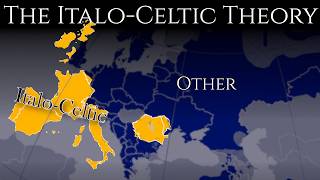
The Italo-Celtic Theory - Similarities between Latin, Welsh and Gaelic
Fortress of Lugh · 17:12
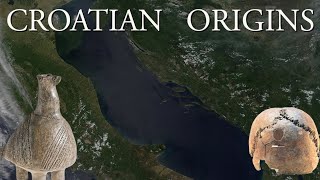
Croatian Origins | A Genetic and Cultural History
Study of Antiquity and the Middle Ages · 28:32

Gobannus: The World-Travelling Smith (Celtic Mythology Explained)
Fortress of Lugh · 44:00

Origins of Vampires - History, Myth & Archaeology
Fortress of Lugh · 38:44

The First Indo-Europeans: The Dnieper Culture, Sredny Stog & the Anatolian Branch
Fortress of Lugh · 42:22

The Indo-European Christ: Origins, Myth & Meaning,
Fortress of Lugh · 55:01
Origins of the Roma Gypsies
Fortress of Lugh · 53:36
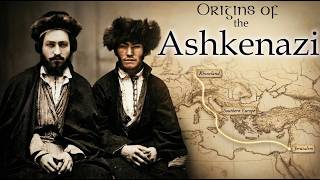
Origins of the Ashkenazi Jews
Fortress of Lugh · 53:36