
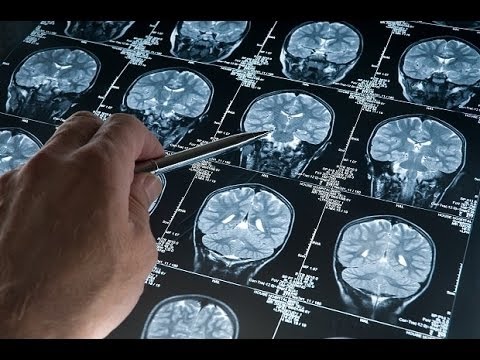
Video unavailable
This video can't be played right now.
Scientists find first drug that appears to slow Alzheimer's disease
Scientists appear to have broken a decades-long deadlock in the battle against Alzheimer’s disease after announcing trial results for the first drug that appears to slow the pace of mental decline. The drug, called solanezumab, was shown to stave off memory loss in patients with mild Alzheimer’s over the course of several years. The effects would have been barely discernible to patients or their families, scientists said, and it is no cure. But the wider implications of the results have been hailed as “hugely significant” because it is the first time any medicine has slowed the rate at which the disease damages the brain. “This is the first evidence of something genuinely modifying the disease process,” said Dr Eric Karran, director of research at Alzheimer’s Research UK. “It’s a breakthrough in my mind. The history of medicine suggests that once you get through that door you can explore further therapeutic opportunities much more aggressively. It makes us less helpless.” Alzheimer's drug trial shows promising early results Read more Existing drugs help with the symptoms but ultimately do nothing to slow the disease’s progression. The drug, developed by the American company Eli Lilly, had previously been tested in a larger group of patients with both mild and moderate dementia and this trial had appeared to end in failure in 2012. However, when scientists analysed the data more closely, they found that in the 1,300 patients with mild dementia, those who had been placed on the drug showed a roughly 30% slower decline in memory and cognitive tests than those who had taken a placebo during the 18-month trial. This was a fairly small difference from the perspective of the patients who had not yet suffered the devastating memory loss or profound changes to personality that come later on. But the result hinted that the drug could work as long as it was given early enough.
Suggested videos

ТОП шокирующих научных открытий | Искусственный интеллект, Живой Мозг в Роботе, Тайны Старения
PRO РОБОТОВ · 13:21

Experimental Alzheimer’s Drug Appears To Slow Cognitive Decline
TODAY · 2:44

Science and technology: watch videos online in high quality and for free! Broadcast starting Apri...
trogerization · 48:55
New Alzheimer's medicine could slow patients' decline
World News · 1:22

100 Древних Артефактов, Которые Выглядят Как Технологии Не Из Нашего Времени
КирТоп - 100 Самых · 1:23:50

First drug that can slow Alzheimer's disease to undergo regulatory approval in U.S, Europe
Arirang News · 0:44

Мир Будущего 2045 | Как Наука и Технологии Победят Старость
PRO РОБОТОВ · 17:52
Eli Lilly study shows Alzheimer's drug slows disease
Reuters · 1:47

Science and Technology: Neanderthals | Science and Technology: Neanderthals. Discovery. Documentary
Наука и Образование · 43:39
Scientists find new drug combination that may be key to Alzheimer's treatment
Arirang News · 1:42

Science and Technology: What Animals Are Building. Discovery
Наука и Образование · 43:53

Eli Lilly's New Drug Could Lead To Alzheimer's Cure - Newsy
Newsy Science · 1:30