
Video unavailable
This video can't be played right now.
"No hope for AI — yet": why healthcare AI can't travel without shared data | Jordi Piera Jiménez
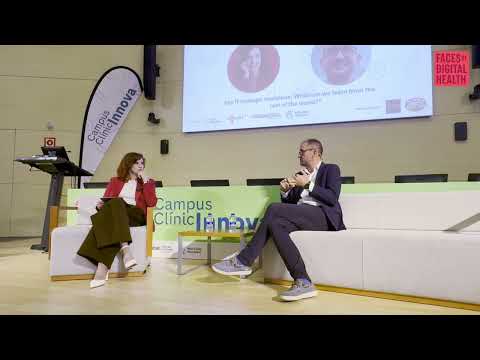
"No hope for AI — yet." says Catalonia's digital health strategist Jordi Piera Jimenez on why AI models fail to travel without shared data foundations. In a discussion at Capus Clinic Innova Summit 2026, Tjasa Zajc moderated a discussion with Jordi Piera Jimenez to discuss interoperability and AI in 2026. Jordi Piera Jiménez has spent two decades connecting health data silos in Catalonia, which he describes as one of the most advanced regions in the world for interoperability. In this conversation he explains why Catalonia's digital health strategy built a common data layer before investing in AI, and why he would not change that order today. He argues that an AI model trained on one hospital's data rarely performs elsewhere, because each model is built on different semantics, and he uses Hospital Clínic's COVID risk algorithm as the example. The conversation also covers the quality of the medical record itself, from copy-pasted notes to hundreds of data silos inside one hospital. The closing section sets out two procurement paths for health systems: outsourcing the full technology stack to one vendor, or owning the data layer and buying best-of-breed solutions on top. GUEST Jordi Piera Jiménez — CEO of openEHR Foundation, Former Director, Digital Health Strategy Office, Catalan Health Service (CatSalut) Host: Tjaša Zajc WHAT THE CONVERSATION COVERS • Who does what: openEHR, SNOMED CT, LOINC and HL7 FHIR • Why AI models don't transfer between hospitals: semantics, not only populations • Catalonia's infrastructure-first digital health strategy and the open platform in healthcare • The platform economy analogy: iOS and Android versus BlackBerry • Patient identifiers, patient matching and the longitudinal health record • EHR data quality: copy-paste clinical notes, 400–600 data silos, unused data • "Right data, right time": why more clinical data is not the goal • AI scribes, patient-generated data and parallel health records • The 17-year adoption gap in healthcare and pressure from the consumer market • Clinicians using LLMs as "Dr Google 2.0", answer consistency and guardrails for CIOs • Digital health training in medical and nursing education • Vibe-coded clinician apps, regulation and owning your digital infrastructure • The WHO/ITU reference architecture for digital public infrastructure for health • Vendor lock-in versus a common data layer: Norway, Sweden, Finland and Asklepios CHAPTERS 00:00 Back from Sydney: standards bodies find common ground 01:40 "No hope for AI yet": openEHR, SNOMED, LOINC and FHIR explained 03:45 Infrastructure first: Catalonia's strategy and the COVID algorithm that couldn't travel 05:10 The open platform in healthcare: lessons from iOS, Android and BlackBerry 07:55 Would the strategy change today? Data silos and patient identifiers 09:05 EHR data quality: copy-paste notes, 400–600 silos, unused data 12:30 Do clinicians need all the data? Right data, right time 14:05 AI scribes, patient-generated data and the 17-year adoption gap 17:10 LLMs as "Dr Google 2.0": consistency, risk and guardrails 19:25 Training clinicians for digital health 21:35 Vibe-coded apps, vendor lock-in and owning your infrastructure 23:35 The WHO/ITU reference architecture for digital public infrastructure for health 25:40 The North Star: Nordic regions, Asklepios and the platform economy FACES OF DIGITAL HEALTH Website: https://www.facesofdigitalhealth.com Newsletter: https://fodh.substack.com LinkedIn: https://www.linkedin.com/company/faces-of-digital-health Spotify: https://open.spotify.com/show/4cElKJHrauyP6QJQaCkvdY Apple Podcasts: https://podcasts.apple.com/gb/podcast/faces-of-digital-health/id1194284040 #openEHR #interoperability #HL7FHIR #SNOMEDCT #digitalhealth #healthdata #Catalonia #healthcareAI #vendorlockin #digitalpublicinfrastructure #FacesOfDigitalHealth
Suggested videos

Can operating room data create surgical capacity? Proximie’s Nadine Hachach-Haram
Faces of Digital Health Podcast · 54:41

How to get hospital AI from pilot to scale (Eyal ZImlichman, Sheba Medical Centre)
Faces of Digital Health Podcast · 40:02

Data challenges with AI: Omissions, bloated problem lists and unnecessary token burn
Faces of Digital Health Podcast · 36:31

EHDS history and 2027 expectations
Faces of Digital Health Podcast · 19:22

We're Overestimating Medical AI — and Underestimating the Harm (Jessica Morley, Yale)
Faces of Digital Health Podcast · 59:12

Adopt AI: Biggest European AI conference 2027 - what will it cover in healthcare?
Faces of Digital Health Podcast · 35:20

Is Detecting Diseases Based on 45 s of Voice Accurate? (Henry O'Connell)
Faces of Digital Health Podcast · 1:13:04
6 Tips for Asking AI About Your Health (From a 20-Year Chronic Patient)
Faces of Digital Health Podcast · 11:05