
Every Type Of Star Explained in 10 Minutes
There's a star about as cold as a winter day. There's one so big it would swallow the Earth whole. And there's one that doesn't exist yet, anywhere. In this video we take every type of star, put it right where our Sun is, and see what would happen to you: from failed stars and red dwarfs, through the Sun, red giants, Rigel, Betelgeuse and the hottest star we know, to white dwarfs, neutron stars, pulsars, magnetars and the black dwarf, the last type of star in the universe. Every number comes from published research (sources below). The "swap it with our Sun" results (how big each star would look in our sky, how much light Earth would get, how hot or cold it would be) are our own rounded calculations from each star's published size and brightness. The black dwarf is hypothetical: the universe is still too young for a single one to exist. #space #astronomy #stars 0:00 Intro: swapping the Sun 0:15 Brown Dwarf: the star that never made it 1:04 Red Dwarf: the most common star 1:58 Yellow Dwarf: our Sun 2:44 Red Giant: Arcturus 3:30 Blue Supergiant: Rigel 4:17 Red Supergiant: Betelgeuse 5:07 Wolf-Rayet Star: the hottest star 5:52 White Dwarf: Sirius B 6:42 Neutron Star 7:30 Pulsar 8:19 Magnetar 9:02 Black Dwarf: the star that doesn't exist yet 9:50 Which one would you swap? Sources Brown dwarfs: not massive enough to fuse hydrogen: https://en.wikipedia.org/wiki/Brown_dwarf JWST looks at the coldest brown dwarf, WISE 0855-0714 (Universe Today, 2024): https://www.universetoday.com/articles/brrr-jwst-looks-at-the-coldest-brown-dwarf Red dwarfs: most common stars, none visible to the naked eye: https://en.wikipedia.org/wiki/Red_dwarf The End of the Main Sequence: red dwarfs live trillions of years (Laughlin, Bodenheimer & Adams, 1997): https://arxiv.org/abs/astro-ph/9701131 Record-breaking flare from Proxima Centauri (CU Boulder, 2021): https://www.colorado.edu/today/2021/04/21/proxima-flare Sun facts: 1.3 million Earths, 99.8% of the solar system's mass (NASA): https://science.nasa.gov/sun/facts/ The Sun: brighter than most stars in the Milky Way: https://en.wikipedia.org/wiki/Sun Distant future of the Sun and Earth revisited (Schröder & Smith, 2008): https://arxiv.org/abs/0801.4031 Arcturus: red giant, 25 times wider than the Sun: https://en.wikipedia.org/wiki/Arcturus Rigel: blue supergiant in Orion: https://en.wikipedia.org/wiki/Rigel Betelgeuse: size, mass and when it will explode (Joyce et al., 2020; Kavli IPMU): https://www.ipmu.jp/en/node/8466 Betelgeuse's Great Dimming was a dust cloud (ESO, 2021): https://www.eso.org/public/news/eso2109/ Physical properties of Wolf-Rayet stars (Crowther, 2007): https://arxiv.org/abs/astro-ph/0610356 WR 102: the hottest known star: https://en.wikipedia.org/wiki/WR_102 WR 140: dust shells seen by JWST: https://en.wikipedia.org/wiki/WR_140 Sirius B: mass and size: https://en.wikipedia.org/wiki/Sirius_B White dwarfs: about 97% of stars end as one: https://en.wikipedia.org/wiki/White_dwarf Neutron stars (NASA Imagine the Universe): https://imagine.gsfc.nasa.gov/science/objects/neutron_stars1.html A sugar cube of neutron star weighs a billion tons (NASA Chandra): https://chandra.cfa.harvard.edu/20th/images/Science_by_the_numbers.pdf The first pulsar, LGM-1 (Bell Burnell, 1967): https://en.wikipedia.org/wiki/PSR_B1919%2B21 A radio pulsar spinning at 716 Hz (Hessels et al., 2006): https://arxiv.org/abs/astro-ph/0601337 The pulsar map on the Voyager Golden Record (NASA): https://science.nasa.gov/mission/voyager/golden-record-cover/ Magnetars: the strongest magnets in the universe (NASA): https://imagine.gsfc.nasa.gov/science/featured_science/tenyear/magnetars.html A magnetar could wipe credit cards from halfway to the Moon (ESA): https://www.esa.int/ESA_Multimedia/Images/2009/06/Illustration_of_a_magnetar McGill online magnetar catalog: https://www.physics.mcgill.ca/~pulsar/magnetar/main.html The 2004 giant flare of SGR 1806-20 (NASA Swift): https://swift.gsfc.nasa.gov/news/2005/05-051.html Black dwarfs: the theoretical end of stellar evolution (Space.com): https://space.com/23799-black-dwarfs.html Black dwarf supernovae in the far future (Caplan, 2020): https://arxiv.org/abs/2008.02296
Suggested videos
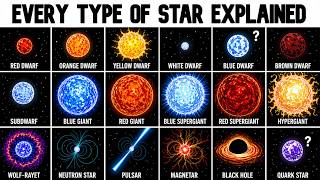
Every Type Of Star Explained in 10 minutes
Bluntly Explained · 10:47
Every Unsolved Mystery Of The Universe Explained in 11 Minutes
lauralonglegs1 · 11:35
Every Star That Shouldn't Exist Explained in 13 Minutes
Bluntly Explained · 13:02
The Biggest Stars In The Universe Explained in 10 Minutes
lauralonglegs1 · 10:18
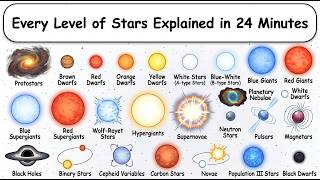
Every Level of Stars Explained in 24 Minutes
Cosmic Atlas · 24:06
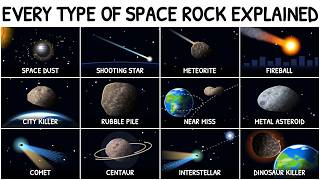
Every Type Of Space Rock Explained in 10 Minutes
lauralonglegs1 · 10:38

What If We Replaced The Sun With Every Type Of Star?
lauralonglegs1 · 10:36
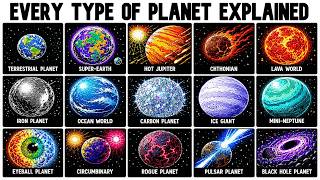
Every Type Of Planet Explained in 12 Minutes
Bluntly Explained · 12:14
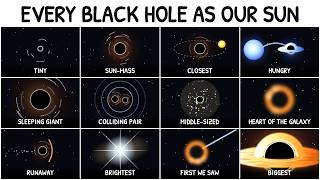
What If We Replaced The Sun With Every Type Of Black Hole Explained in 10 Minutes
lauralonglegs1 · 10:44
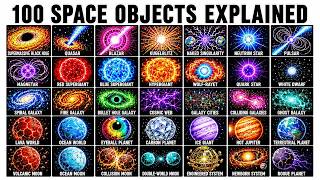
100 Space Objects Explained in 1 Hour (MARATHON)
Bluntly Explained · 1:07:40
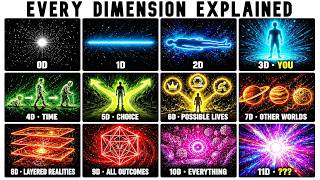
Every DIMENSION Explained in 9 Minutes
Bluntly Explained · 9:47