
Anatomical Directional Terms - Why Doctors Use Big Words to Describe Where Things Are
Learn A&P 2 with me! Enrollment closes Monday morning (October 5): https://courses.siebertscience.com 🫀 🧠 Join THE MEMORY LAB, where I teach you how to learn science so you score higher, remember more, and feel confident in your exams! 🤓 https://memorylab.siebertscience.com ----- 🧑🏽🎓Learning anatomy & physiology? Check out these resources I've made to help you learn! ↙️ 📗 FREE A&P SURVIVAL GUIDE 🧠 https://siebertscience.ck.page/anatomysurvivalguide 📘 A&P STUDY CARDS 🫀 https://store.siebertscience.com/products/anatomy-physiology-study-cards 🫁 COMPLETE LIST OF ALL MY A&P VIDEOS 💀 https://www.siebertscience.com/science/anatomy-physiology 🧠 COMPREHENSIVE A&P SYSTEM GUIDES 👀 https://store.siebertscience.com ⬆️ Guides coming soon! Check back in August 2024. ----- 🩻 Support the channel and get access to blank and labeled diagrams for all of my anatomy & physiology videos! - https://www.patreon.com/siebertscience ----- Doctors use anatomical directions terms (superior, inferior, anterior, posterior, distal, proximal, superficial, deep, cranial, caudal, dorsal, and ventral) to describe the locations of structures in the body. I explain why these are needed and give an overview of each term. This is the first video in my Anatomy & Physiology series! ----- Images used: https://commons.wikimedia.org/wiki/File:Anatomical_Position.png https://commons.wikimedia.org/wiki/File:Anatomical_Directions_2.png https://commons.wikimedia.org/wiki/File:Thigh_cross_section.svg Music from: Storyblocks Audio (Free Version)
Suggested videos

How to Ace A&P Exams – Advice from an Anatomy Professor
Siebert Science · 52:03

Regional Terms, Directional Terms, and Planes & Sections
Dr Matt & Dr Mike · 14:23
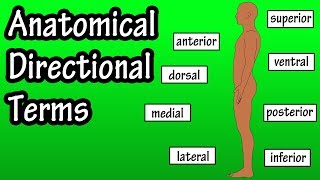
Anatomical Position And Directional Terms - Anatomical Terms - Directional Terms Anatomy
Whats Up Dude · 3:16
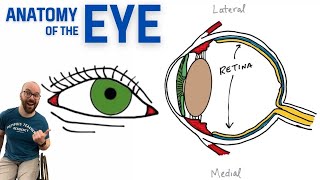
Anatomy of the Eye
Siebert Science · 9:21
Anatomical Position and Directional Terms - Anatomy and Physiology
RegisteredNurseRN · 8:01

Lymphatic System
Siebert Science · 23:51

The Easiest Way to Learn Directional Terms - Anatomy Basics | Corporis
Corporis · 4:10

Components of Blood
Siebert Science · 10:34

Anatomical Planes | Directional Terms | Anatomy Terms | Anatomy Doodles
Byte Size Med · 10:03

Brain: Cerebrum and Cerebellum (+ Broca’s, Wernicke’s, and limbic overview)
Siebert Science · 11:54
Directional Terminology - Anatomy & Physiology (Made Easy!)
Organized Biology · 15:10
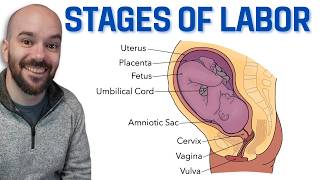
Stages of Labor (Dilation, Expulsion, Placental)
Siebert Science · 22:29