
Angular Acceleration & Integration: Rotating Platform | Engineering Dynamics Part 13
Welcome back to Engineering Dynamics with Prof. Gearford Orange from the F.I.T. Department of Mechanical Engineering! How do we calculate angular velocity when angular acceleration changes with time? In Engineering Dynamics Part 13, we’ll solve a rotational kinematics problem involving an industrial testing platform with two different acceleration phases. We’ll use integration, piecewise angular acceleration, and acceleration-time graphs to determine angular velocity and tangential speed. Step 1: Understanding the Problem A testing platform rotates counterclockwise around a fixed vertical axis. Given: * Sensor radius: r = 1.50 m * Initial angular velocity: ω₀ = 0.80 rad/s * Phase 1: Quadratically increasing acceleration, 0–6 s * Phase 2: Linearly decreasing acceleration, 6–14 s * Maximum angular acceleration: α = 0.90 rad/s² Find the sensor’s tangential speed at t = 6 s and t = 14 s. Step 2: Angular Acceleration and Integration Angular acceleration is the rate of change of angular velocity: α = dω/dt Therefore: ω(t) = ω₀ + ∫α(t) dt For a point at fixed radius, tangential speed is: v = r|ω| Step 3: Phase 1 — Quadratic Acceleration For 0 ≤ t ≤ 6 s: α(t) = 0.90(t/6)² α(t) = 0.025t² Integrating from t = 0: ω(t) = 0.80 + ∫₀ᵗ 0.025τ² dτ ω(t) = 0.80 + t³/120 At t = 6 s: ω(6) = 0.80 + 216/120 ω(6) = 2.60 rad/s Tangential speed: v(6) = 1.50 × 2.60 v(6) = 3.90 m/s Step 4: Phase 2 — Linear Acceleration From 6 to 14 seconds, acceleration decreases from 0.90 to zero. Slope: m = (0 − 0.90)/(14 − 6) m = −0.1125 Therefore: α(t) = 0.90 − 0.1125(t − 6) For 6 ≤ t ≤ 14 s, integrate using ω(6) = 2.60 rad/s: ω(t) = 2.60 + 0.90(t − 6) − 0.05625(t − 6)² At t = 14 s: ω(14) = 2.60 + 0.90(8) − 0.05625(8²) ω(14) = 2.60 + 7.20 − 3.60 ω(14) = 6.20 rad/s Tangential speed: v(14) = 1.50 × 6.20 v(14) = 9.30 m/s Step 5: Graphical Interpretation The area beneath an angular acceleration-time graph represents the change in angular velocity: Δω = ∫α(t) dt Phase 1 — Parabolic area: Δω₁ = 1.80 rad/s Phase 2 — Triangular area: Δω₂ = ½ × 8 × 0.90 Δω₂ = 3.60 rad/s Total: ω(14) = 0.80 + 1.80 + 3.60 ω(14) = 6.20 rad/s The graphical and analytical methods give the same result! Final Results Quantity t = 6 s t = 14 s Angular velocity 2.60 rad/s 6.20 rad/s Tangential speed 3.90 m/s 9.30 m/s Angular acceleration 0.90 rad/s² 0 rad/s² Key Takeaways * Integrating angular acceleration gives the change in angular velocity. * For multiple phases, the final velocity of one phase becomes the initial velocity of the next. * The area beneath an acceleration-time graph represents the accumulated velocity change. * Zero angular acceleration does not mean zero angular velocity! Thanks for watching, and see you in the next lesson! #EngineeringDynamics #AngularAcceleration #AngularVelocity #RotationalKinematics #Integration #RotationalMotion #RigidBodyDynamics #MechanicalEngineering #EngineeringMechanics #Kinematics #Dynamics
Suggested videos
Slider-Crank Mechanism: Piston Position, Velocity & Acceleration | Engineering Dynamics Part 14
Fruit Institute of Technology · 9:03
Rotational Motion Physics, Basic Introduction, Angular Velocity & Tangential Acceleration
The Organic Chemistry Tutor · 11:28
Angular Acceleration Explained: Find Angular Velocity & Position | Dynamics
EpperlyNotes · 9:57
Coriolis Acceleration Explained: Rotating Arm Problem | Engineering Dynamics Part 12
Fruit Institute of Technology · 9:28
ROTATIONAL MOTION. Find ANGULAR ACCELERATION and ANGULAR VELOCITY
Physics Tutor Genius Learning · 9:37

MSU IAT Fruit, Vegetable and Organic Horticulture Management
MSU College of Agriculture and Natural Resources · 2:31
Torque, Moment of Inertia, Rotational Kinetic Energy, Pulley, Incline, Angular Acceleration, Physics
The Organic Chemistry Tutor · 3:29:44
Differentiation & Integration in Kinematics | Engineering Dynamics Part 2
Fruit Institute of Technology · 7:27
Angular Momentum - Basic Introduction, Torque, Inertia, Conservation of Angular Momentum
The Organic Chemistry Tutor · 6:20
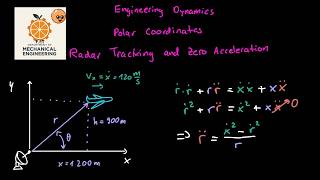
Polar Coordinates: Radar Tracking & Zero Acceleration | Engineering Dynamics Part 11
Fruit Institute of Technology · 9:04

Angular Equations of Motion
Matthew Fairbanks · 9:33

Fruit & Vegetable Crop Management at the MSU Institute of Agricultural Technology
MSU College of Agriculture and Natural Resources · 0:41