
A&P1 Lecture 9.1 - Muscular System | Part 1 (Anatomy, Characteristics, & Contraction Mechanism)
Get the diagrams here - https://organizedbiology.gumroad.com/l/lnomf?wanted=true More at https://organizedbiology.com/ Welcome to A&P 1 Lecture 9.1: The Muscular System! 🦴💪 In this anatomy and physiology lecture, we're breaking down the three types of muscle tissue, the unique characteristics of skeletal muscle, the microscopic anatomy of a skeletal muscle cell, and the incredible process that allows muscles to contract and generate force. Whether you're studying for an Anatomy & Physiology I exam, preparing for nursing school, or reviewing for a healthcare program, this lecture will help you understand the muscular system and connect the microscopic structures of muscle to their functions. We'll work from the organization of muscle tissue all the way down to the proteins responsible for muscle contraction! 📚 What You'll Learn in This Video ✅ The 3 Types of Muscle Tissue Skeletal muscle: structure, function, and voluntary control Cardiac muscle: characteristics and function of the heart Smooth muscle: structure, location, and involuntary contractions Key differences between skeletal, cardiac, and smooth muscle tissue ✅ Characteristics of Skeletal Muscle Excitability, contractility, extensibility, and elasticity The major structural and functional characteristics of skeletal muscle How skeletal muscles produce movement and generate force ✅ Skeletal Muscle Anatomy: From Whole Muscle to Microscopic Structures The organization of skeletal muscle into fascicles, muscle fibers, and myofibrils Connective tissue layers: epimysium, perimysium, and endomysium The anatomy of a skeletal muscle cell (muscle fiber) The sarcolemma, sarcoplasm, and sarcoplasmic reticulum T-tubules and their role in muscle contraction Myofibrils, sarcomeres, and the proteins that make muscle contraction possible Actin, myosin, troponin, and tropomyosin ✅ Myofibril Anatomy & the Sliding Filament Theory The anatomy of a sarcomere, the functional unit of skeletal muscle Thin filaments (actin) and thick filaments (myosin) Z discs, the A band, the I band, and the H zone How myosin interacts with actin to generate force The cross-bridge cycle and the role of ATP How actin and myosin slide past one another to shorten sarcomeres Why the filaments themselves do not need to shorten for a muscle to contract How microscopic sarcomere shortening contributes to whole-muscle contraction 🎯 Why Is This Important for Nursing Students? Understanding muscle anatomy and physiology is essential for connecting basic science to clinical practice. The muscular system plays an important role in movement, posture, physical assessment, and many other physiological processes. These concepts are especially useful for students preparing for Anatomy & Physiology exams, nursing prerequisites, practical laboratory exams, and other healthcare-related coursework. If you're studying for A&P I, nursing school, or another allied health program, subscribe to Organized Biology for more anatomy and physiology lessons made easy! 👍 Like this video if it helped you understand the muscular system. 💬 Comment below with a question or a muscular system topic you'd like me to explain next. 🔔 Subscribe for more Anatomy & Physiology lectures, exam reviews, and healthcare science explanations! #AnatomyAndPhysiology #MuscularSystem #AP1 #AandP #NursingStudents #NursingSchool #AnatomyAndPhysiology1 #SkeletalMuscle #SlidingFilamentTheory #MuscleContraction #Sarcomere #Myofibril #ActinAndMyosin #MuscleTissue #HumanAnatomy #HumanPhysiology #AnatomyLecture #Physiology #NursingPrerequisites #AlliedHealth #HealthcareStudents #APStudy #Biology #BiologyMadeEasy #AnatomyMadeEasy #NursingSchoolPrerequisites #APExam #StudyTips #OrganizedBiology
Suggested videos
A&P1 Lecture 10.1 - Nervous System Organization (CNS, PNS) | Neuron Structure/Function
Organized Biology · 53:25
A&P1 Lecture 9.2 - Muscular System | Part 2 (Neuromuscular Junction, ATP Production, Muscle Fibers)
Organized Biology · 56:59
Muscular System: Structure, Contraction, and Regional Muscles (FULL LECTURE)
Human Anatomy Brad · 1:41:28
Nervous System: Action Potentials & Graded Potentials (Explained!)
Organized Biology · 13:59
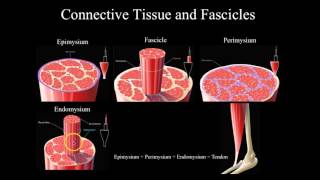
Adv. A&P CH 9 Muscular System (Sec. 9.1 and 9.2) Lecture 1
Ecogeek Jones · 20:49

Nutrition & Metabolism for Anatomy & Physiology - EVERYTHING You Need to Know!
Organized Biology · 1:42:29
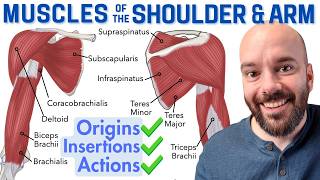
Shoulder & Arm Muscles - NEVER FORGET Origins & Insertions Again!
Siebert Science · 31:57
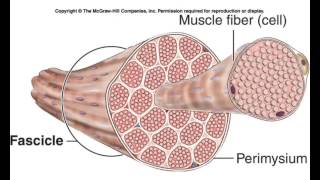
Macauley BIOL 105 Lecture 10 Chapters 9-10 Muscular System F14
Shawn Macauley · 1:26:30
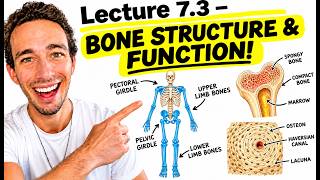
A&P1 Lecture 7.3 - Skeletal System (Bone Structure & Function - Made Easy!)
Organized Biology · 1:01:55
Muscle Cell Structure - Made Easy! (Skeletal Muscle Histology)
Organized Biology · 12:26
Anatomy & Physiology 1 - Lecture 1 | Homeostasis, Levels of Organization, Core Concepts
Organized Biology · 1:01:06
Anatomy & Physiology Chapter 9 Part B Lecture: Muscles & Muscle Tissue
Fuzail Majoo · 26:42