
Facts about Carter G. Woodson “The Father of Black History Month”.
In 1915, Carter G. Woodson traveled to Chicago from his home in Washington, D.C., to take part in a national celebration of the 50th anniversary of emancipation. He had earned his bachelor's and master's degree at the University of Chicago and still had many friends there. As he joined the thousands of Black Americans overflowing from the Coliseum, which housed exhibits highlighting African American achievements since the abolition of slavery, Woodson was inspired to do more in the spirit of celebrating Black history and heritage. Before leaving Chicago, he helped found the Association for the Study of Negro Life and History (ASNLH). A year later, Woodson singlehandedly launched the Journal of Negro History, in which he and other researchers brought attention to the achievements of Black Americans. Born in 1875 in New Canton, Virginia, Woodson had worked as a sharecropper, miner, and various other jobs during his childhood to help support his large family. Though he entered high school late, he made up for a lost time, graduating in less than two years. After attending Berea College in Kentucky, Woodson worked in the Philippines as an education superintendent for the U.S. government. He earned his bachelor's and master's degrees at the University of Chicago before entering Harvard. In 1912, three years before founding the ASNLH, he became only the second African American (after W.E.B. DuBois) to earn a doctorate from that institution. Like DuBois, Woodson believed that young African Americans in the early 20th century were not being taught enough of their heritage and the achievements of their ancestors. To get his message out, Woodson first turned to his fraternity, Omega Psi Phi, which created Negro History and Literature Week in 1924. But Woodson wanted a more comprehensive celebration, and he decided that the ASNLH should take on the task. In February 1926, Woodson sent out a press release announcing the first Negro History Week. He chose February because the month contained the birthdays of both Abraham Lincoln and Frederick Douglass, two prominent men whose historic achievements African Americans already celebrated. (Lincoln's birthday was February 12; Douglass, a formerly enslaved person, hadn't known his actual birthday but had marked the occasion on February 14.) With the help of Mary McLeod Bethune and others, schools and other organizations across the country quickly embraced Woodson's initiative. However, he and his colleagues struggled to meet the course materials, and other resources demand. As a result, the ASNLH formed branches all over the country, though its national headquarters remained centered in Woodson's row house on Ninth Street in Washington D.C. The house was also home base for the Associated Publishers Press, which Woodson had founded in 1921.
Suggested videos
10 Things about Dr. Carter G. Woodson - Father of Black History Month
Black Excellence Excellist · 12:21

ABSOLOOT - AMERICAN SOLDIER - OFFICIAL MUSIC VIDEO AsIAmRecords
teamabsoloot · 4:03

Building Our Youth Through Positive Messaging: From Concept To Comic
teamabsoloot · 2:59
A History of African Civilizations, Dr. Carter G. Woodson, Father of Black History, Primary Research
Michael Imhotep · 2:14:02

Absoloot Freestyle 1 AsIAmRecords
teamabsoloot · 2:51

Black History for Students | Carter G Woodson Biography | Father of Black History Month
Fresberg Cartoon – Learning & History for Students · 2:58

I Roll Absoloot AsIAmRecords
teamabsoloot · 1:48
Carter G. Woodson is 'The Father of Black History Month'
WTHR · 4:10

Follow Me video.wmv Absoloot AsIAmRecords
teamabsoloot · 3:48
Who Was Carter G. Woodson? (Facts for Kids)
Hey! Guess What · 2:53

Absoloot Freestyle 3
teamabsoloot · 2:37
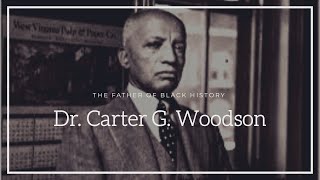
Dr. Carter G. Woodson: The Father of Black History (Episode 5)
Record West Virginia · 10:04