
The Posterior Bolton Ratio and the Effect of Extracting All 4 First Premolars
Summary of Dr. Anthony Mongillo's Master's Thesis published by the American Journal of Orthodontics and Dentofacial Othopedics (AJO-DO, December 2021, Vol 260, Num 6, pp 824-834). In 1952, Dr. Bolton discovered that dental occlusion can be described by a ratio of widths of the mandibular teeth / the widths of maxillary teeth. Ideal occlusion has been found to have a specific ratio of 91.3% for all teeth, and 77.2% for just the anterior teeth. These ratios are called "Bolton Ratios." Prior to this study, no ratio has been reported for just posterior teeth. This study found that the ratio that describes ideal posterior occlusion is 105.8%. Extracting the four first premolars is a common extraction pattern in orthodontics. This study looks at a sample of 55 past orthodontic patients' teeth which have ideal Bolton ratios. Using this sample, it explores what happens to the occlusion of the posterior teeth, as well as how the posterior Bolton ratio changes, when four first premolars are digitally extracted, the spaces are digitally closed, and the remaining teeth are digitally aligned in ideal occlusion. Results show that the extraction space is usually closed in the maxilla, but there is an average of 1.1mm of residual spacing between the mandibular second premolar and first molar. In 27% of the sample, there was 1.5mm space, and in 16% of the sample there was as much as 2mm of space. One would expect the ideal posterior Bolton ratio to be 107.3% based on the mathematics of omitting the widths of the extracted first premolars. However, when remaining posterior teeth are placed in ideal occlusion and the residual space between the mandibular second premolars and first molars are factored into the calculation, we see that the ideal ratio of posterior teeth is 110.5%. These discoveries may be clinically significant to the orthodontist. The orthodontist should recognize that a patient who starts orthodontic treatment with ideal Bolton ratios (overall, anterior, posterior) and needs to undergo extraction of all four first premolars will most likely have residual space between the mandibular second premolar and first molar. If occlusion is prioritized, this residual space could be resolved either with interproximal reduction between the maxillary second premolar and first molar, or by placing a composite build-up between the teeth to close the space. If space closure is prioritized over occlusion then two scenarios are possible: Either the teeth anterior to the space are retracted, resulting in a slight Class 2 (weak Class 1) canine relationship; Or the teeth posterior to the space are protracted, resulting in a slight Class 3 (strong Class 1) molar relationship. An equation for predicting the potential residual space one might anticipate when all four first premolars are planned to be extracted is offered. The equation simply needs the widths of 2 teeth: the maxillary and mandibular second premolars. Residual spacing = 12.43(U5s width/L5s width) + 0.29(U5s width) - 14.56. This equation can be used prior to starting orthodontic treatment to forecast potential future challenges and plan potential solutions as described above.
Suggested videos

Dental Health Awareness! Mongillo Orthodontics
Elise Mongillo · 8:04

Posterior Bolton’s Discrepancy? New Analysis To Solve Old Problems 5 MINUTE SUMMARY
Farooq Ahmed · 5:19

Meet Dr. Anthony Mongillo
Mongillo Orthodontics · 0:43
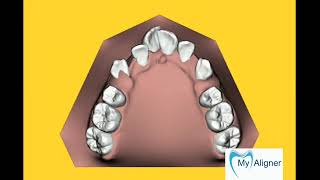
Treatment plan of a case with extreme crowding treated by first premolar extraction with #myaligners
Mybraces Dental Clinic · 0:54

Why Moms Choose Mongillo Orthodontics
Mongillo Orthodontics · 0:23
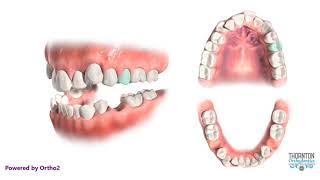
4 Second Bicuspid Extraction
Thornton Orthodontics · 0:18

🦷 The Mongillo Difference: Personalized Care for Your Unique Smile 😊🌈
Jessica (Nead) Cardon | The Knowsy Neighbor · 16:51
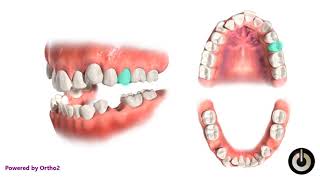
4 Second Premolar Extraction
Pesh Orthodontics, Menifee · 0:18

Expander Tutorial
Mongillo Orthodontics · 5:35
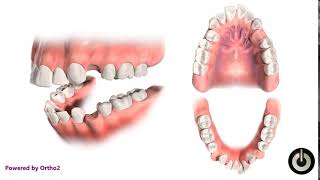
Four Bicuspid Extraction
Creative Orthodontics · 0:12
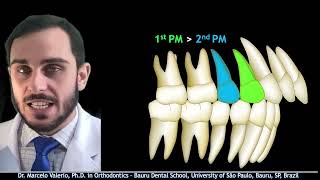
Stability of first and second premolars extraction space closure.
ElsevierEPDUS ran · 2:55

The effect of 4 first premolar extractions on the posterior Bolton ratio
ElsevierEPDUS ran · 4:59