
Video unavailable
This video can't be played right now.
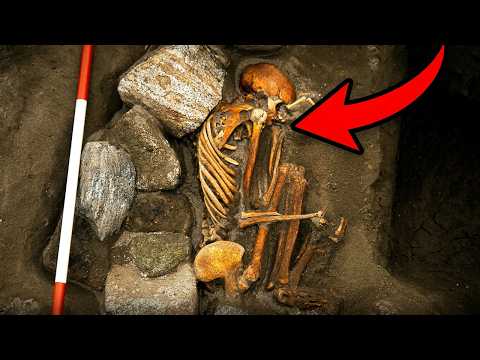
Scientists Found Two Bodies Under a Scottish Floor — DNA Showed They Were Many
Three thousand years ago, on a windswept island off the coast of Scotland, two bodies were buried beneath the floor of a house — a man and a woman, curled up as if asleep. For decades everyone assumed they were exactly that: two preserved ancestors, kept close by the family who loved them. Then scientists read the genetic code locked in their bones, and the count came back wrong. These were not two people at all. This is the strange story of the Cladh Hallan mummies: how Bronze Age Britain turned out to have its own mummy-makers, why these bodies were soaked in a bog and kept for centuries before burial, and what the DNA finally revealed when the “man” and the “woman” were tested bone by bone. The answer rewrites what a body even meant to the people who built them — and makes you wonder how many other ancient skeletons are quietly more than one person. DNA Mystery explores the cases where science rewrites what the history books taught us. Subscribe and turn on notifications. Discovery continues. SOURCES Hanna, J., Bouwman, A.S., Brown, K.A., Parker Pearson, M. & Brown, T.A. (2012). Ancient DNA typing shows that a Bronze Age mummy is a composite of different skeletons. Journal of Archaeological Science, 39(8), 2774–2779. Parker Pearson, M. et al. (2005). Evidence for mummification in Bronze Age Britain. Antiquity, 79(305), 529–546. University of Sheffield / Cladh Hallan excavations, South Uist, Outer Hebrides. #BogBodies #CladhHallan #AncientDNA #BronzeAge #Scotland #Mummies #Archaeology #DNAMystery #AncientMystery #LostHistory
Suggested videos
Scientists Found Two Bodies Under a Scottish Floor - DNA Showed They Were Many
Horizon Findings · 21:50
DNA BOMBSHELL in New Mom Murder Mystery
COURT TV · 45:12
The DNA Mystery: How a Mother Proved Science Wrong
The Documentary Collection · 46:24

Scientists Found Two Bodies Under a Scottish Floor — DNA Showed They Were Many
Hidden Quest · 19:15
DNA Exposed the Truth After 13 Years of Lies
Cold Case Narrator and Crime Narrator · 33:33
Scientists Found Two Bodies Under a Scottish Floor — DNA Showed They Were Many
Hidden Quest · 17:01
At-Home DNA Testing Exposes Family Secrets | NBC10 Philadelphia
NBC10 Philadelphia · 5:16
What Scientists Found Inside The 3,000 Year Old Skeletons From Scotland Is Extremely Interesting
Genefall · 10:39

Patsy Ramsey's DNA Found On The Ransom Note - ABC Documentary
True Crime Rocket Science · 17:41
Killers Caught by Evidence That Shouldn't Exist, Explained
The Platypus Explains · 13:05
The Iceman Was NOT Who Scientists Thought For 30 Years — DNA Just Proved It
DNA Mystery and Forensic Mystery · 18:59
When Two Mummified Bodies Were Dug Up, Locals Claimed They Held The Key To A Mysterious Legend
KSC | Knowledge,Science,Culture Everyday . · 14:11