
Gas Chromatography Explained For Beginners
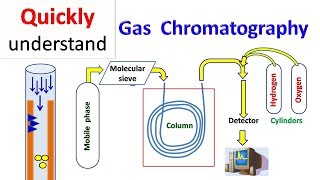
Gas chromatography is an analytical technique used to separate and detect the chemical components of a sample mixture to determine their presence or absence and/or quantities. The components of gas chromatography include: 1. A mobile phase, usually consisting of helium or nitrogen 2. A molecular sieve which removes unwanted hydrocarbons, water vapor and oxygen 3. The column which in this case has a coil shape and within it the: 4. Stationary phase which is usually silicone, grease or wax 5. A detector which can be a flame Ionization (FID), thermal conductivity (TCD) and Electron capture (ECD) So how is gas chromatography carried out? 1. The sample is first introduced into the gas chromatograph (GC) right before the column, often using a syringe 2. The molecules are separated based on how they interact with the stationary phase. Like separates like, therefore non-polar columns are good for separating non-polar analytes and polar columns are good for separating polar analytes. 3. Then once the different components of the sample exits the column, they are detected and the results are displayed in a gas chromatogram. 4. This chromatogram displays peaks of the generated current from the detector against retention time, i.e. when does the sample component exit the column from the time the sample was inserted and for how long is it exiting the column. The area under the peak gives us information about the concentration of the sample. More area, more concentration and less area, less concentration. Then by using gas chromatograms from different samples and checking their retention time and peaks we can determine what is present in an unknown sample. Furthermore gas chromatography can be combined with mass spectrometry to further analyze the results in a process called gas chromatography mass spectrometry or GC-MS.
Suggested videos

Toddler Learning Numbers, Colors For Kids, ABC Song, Toddler and Baby Learning With Lucas & Friends
Toddler Learning Videos For Kids - Lucas & Friends · 47:10
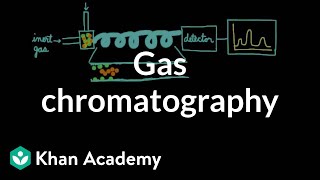
Gas chromatography | Chemical processes | MCAT | Khan Academy
khanacademymedicine · 8:38

Baby Learning With Lucas - Learn to Talk, First Words, Animal Sounds, Songs - Toddler Learning Video
Toddler Learning Videos For Kids - Lucas & Friends · 1:02:44
Gas chromatography | GC
Quick Biochemistry Basics · 5:25

Baby Learning First Words | Learn to Talk For Babies | Toddler Videos & Songs With Lucas & Friends
Toddler Learning Videos For Kids - Lucas & Friends · 30:13

Gas Chromatography
NC State Undergraduate Organic Chemistry Teaching Laboratories - S.M.A.R.T. Lab Videos · 2:45
Baby Learning First Words & Learn to Talk | Animal Sounds, Numbers, Songs & Activities with Lucas
Toddler Learning Videos For Kids - Lucas & Friends · 1:03:29
Introduction to Gas Chromatography
UMNOrganicChemistry · 3:51
Baby Learning Videos | Toddler Learning Body Parts, First Words, Shapes & Baby Songs with Lucas
Toddler Learning Videos For Kids - Lucas & Friends · 41:50
Gas Chromatography Demystified - Understanding How A GC Works
Axion Labs & Training Institute · 47:03

Baby Learning First Words, Learning To Talk, Kids Songs | Baby Videos and Toddler Learning Videos
Toddler Learning Videos For Kids - Lucas & Friends · 1:03:46
GC-MS For Beginners (Gas Chromatography Mass Spectrometry)
Lucas Learns · 5:08