
This Isn't Sci-Fi. It's the Future of Space Travel
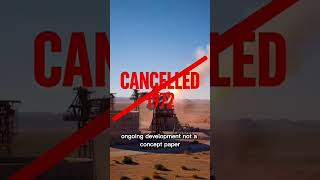
Humanity has used essentially the same basic rocket technology for more than 70 years. That may finally be changing. In this video, we explore the next generation of space propulsion—from nuclear fusion and nuclear fission to solar sails, electric propulsion, laser-driven spacecraft, and SpaceX Starship—and examine which technologies could actually take humans beyond the limits of conventional chemical rockets. The biggest development is **fusion propulsion**. On March 25, 2026, UK-based Pulsar Fusion achieved what it describes as first plasma inside its Sunbird propulsion system, demonstrating the physical architecture behind a proposed fusion-powered space engine. Unlike conventional rockets, the concept uses extremely hot plasma generated by fusion and directs it through a magnetic nozzle to produce thrust while also generating electrical power. :contentReference[oaicite:1]{index=1} The potential performance is extraordinary. Pulsar's projections put Sunbird's specific impulse at roughly **10,000–15,000 seconds**, compared with around 380 seconds for advanced chemical engines. The company says future versions could dramatically reduce deep-space travel times, potentially making a Pluto mission possible in roughly four years rather than the nine-plus years required by New Horizons. :contentReference[oaicite:2]{index=2} But this is still an experimental technology. First plasma does not mean a working fusion spacecraft already exists. Engineers still have to demonstrate sustained operation, manage neutron radiation, protect the reactor and magnets, and prove the system can survive the enormous demands of a real mission. An orbital demonstration of core Sunbird components is targeted for 2027. :contentReference[oaicite:3]{index=3} Then there's **nuclear thermal propulsion**. NASA and DARPA's DRACO program was intended to demonstrate a nuclear thermal rocket in space, potentially reviving a technology first seriously tested during the NERVA era of the 1960s and 1970s. But the program was cancelled after funding and cost-benefit priorities shifted, leaving nuclear electric propulsion as a potentially more attractive long-term alternative. :contentReference[oaicite:4]{index=4} Solar sails offer an entirely different solution. Instead of carrying propellant, they use the momentum of sunlight itself. NASA's **Advanced Composite Solar Sail System (ACS3)** successfully deployed an approximately 80-square-meter sail in 2024, demonstrating lightweight composite boom technology that could eventually support much larger sails for long-duration missions. :contentReference[oaicite:5]{index=5} And then there's **Breakthrough Starshot**. The ambitious concept proposes using enormous ground-based lasers to accelerate tiny, ultra-light spacecraft to a significant fraction of the speed of light. In theory, such probes could reach the Alpha Centauri system within a few decades rather than the tens of thousands of years required by conventional spacecraft. The program itself has faced serious funding and technical uncertainty, but research into the underlying laser-sail technology continues. :contentReference[oaicite:6]{index=6} Meanwhile, **SpaceX Starship** is attacking the problem from another direction. Starship still relies on chemical propulsion, but its goal is to make launching enormous amounts of mass dramatically cheaper through rapid reusability. Its progress includes major achievements as well as continuing problems with engine relights, testing, and the crucial technology of orbital propellant transfer. :contentReference[oaicite:7]{index=7} That orbital refueling capability may be the key to Mars. A Mars-bound Starship would require hundreds of tons of liquid oxygen and methane beyond what it can practically launch with, meaning multiple tanker Starships would need to rendezvous and transfer cryogenic propellant in orbit. While SpaceX has demonstrated smaller-scale propellant transfer, the full operational sequence required for a Mars mission remains unproven. :contentReference[oaicite:8]{index=8} And we shouldn't forget the technology already working today: **electric propulsion**. Ion engines and Hall-effect thrusters produce tiny amounts of thrust but can operate continuously for months or years, allowing spacecraft such as NASA's Dawn and Psyche to achieve enormous changes in velocity while using very little propellant. :contentReference[oaicite:9]{index=9} The important point is that there is no obvious winner yet. Fusion offers extraordinary potential speed and efficiency. Nuclear propulsion could provide powerful deep-space capability. Solar sails eliminate conventional propellant entirely. Laser sails could eventually make interstellar probes possible. #SpaceTravel #FusionPropulsion #PulsarFusion #Sunbird #SpaceX #Starship #NASA #NuclearPropulsion #SolarSail #ElectricPropulsion #Mars #InterstellarTravel #SpaceTechnology #FutureOfSpace
Suggested videos

This Isn’t Sci-Fi. It’s the Future of Space Travel
Astrum · 26:43

INNA DEEP – COSMOS (Official Lyric Video)
Inna Deep · 3:01

Space Ambient Music ★ Pure Cosmic Relaxation ★ Mind Relaxation
Relaxation Ambient Music · 3:12:16

This Isn’t Sci-Fi. It’s the Mind Blowing Future of Space Travel
Cosmic Minutes · 5:52

Inna Deep - Cosmos (8D Audio) 🎧 | Use Headphones 🌌
Decelerated_Hertz · 3:04

This Isn’t Sci-Fi. It’s the Future of Space Travel
sosan space 🚀 · 11:12

A Journey to the Edge of the Unexplored | Space Documentary 2025
Kosmo DOC [EN] · 1:18:25
This isn't Sci fi It's the Future of Space Travel
Cosmic Astro Secrets · 6:03

Anomalies in the Universe. Immersion in Deep Space
Kosmo · 3:05:22
The Rocket-Less Future of Space Travel | What the Physics?! | NOVA | PBS
NOVA PBS Official · 5:44

The Emptiness of the Universe. Immersing Deep Space
Kosmo · 2:45:56

“Luxury in Space? Inside the Future of Space Travel & Technology”
Timeless Tales · 12:09