
Video unavailable
This video can't be played right now.
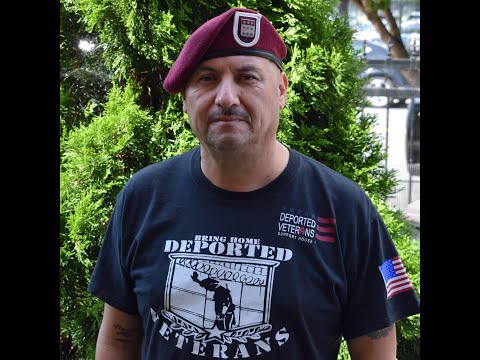
Hector Barajas Varela, Incarcerated Veterans Project, by Jason A. Higgins
Hector Barajas Varela, Incarcerated Veterans Oral History Project, Interviewed by Jason A. Higgins, August 12, 2019, Bronx, New York City. Time Index: 00:00 introductions Bio March 6, 1977 Mexico, Zacatecas a poor farming community US Army, 1995-2001 Five yrs. 10 mos. Non-combat E4 Specialist Parachutist Badge, Airborne “Chaptered out” of the military. Had a DUI incident, while in a rehabilitation program for drugs and alcohol. Forced out with an honorable discharge. Undiagnosed PTSD Had access to counseling services at the time of the interview. 5:00 gang initiation growing up in Compton, CA 7:00 crossed US/Mexico border as ten-year-old but doesn’t remember much. He suffered a traumatic brain injury as a parachutist 8:00 learning English and assimilating 12:00 factors that led to joining the military; “best decision of my life joining the military”; opportunity to go to college; masculinity 15:00 graduated high school in 1995; joined Army under delayed-entry program at 17 years old 16:00 basic training at Ft. Leonardwood, MO 18:00 race relations in the military 20:00 physical and psychological training; graduating 23:00 on gangs in the neighborhood and joining the military 24:00 working in patient administration, medical records, and admissions 25:00 82 Airborne (completed 20 jumps) “scared every time” 28:00 adjusting to military life 30:00 his readjustment to being a veteran was disrupted by incarceration and deportation; I feel like I've been robbed of like 20-something years of my life and I'm barely starting all over again.” 32:00 Life on Ft. Bragg from 1996-99. “All we did was drink.” Culture of drinking 34:00 reenlisted and sent to Ft. Bliss, TX, working in William Beaumont Army Medical Center 36:00 alcohol and drugs; cocaine use; “I asked for help.” Outpatient treatment; inpatient rehabilitation in Point Loma Rehab Center. DUI and punished by the Army 38:00 9/11 and getting kicked out, guilt. Discharged in October 2001. 40:00 identifying as a veteran 41:00 alcohol; drug use; marriage difficulties 42:00 arrested for attempted murder Dec 24, 2001; the decision to plead guilty, even though he didn’t fire the weapon and no one was injured. 44:00 on seeking citizenship in military; going to state prison; veterans dorm in county jail, but not in state prison; racial violence in California prison system; gang violence; Linwood facility veterans dorm culture compared to Delano state prison; 50:00 life in prison; processing; violation of privacy; trauma and violence; relationship between trauma and incarceration; compounded trauma; 52:00 gang violence; being assaulted in prison; “you got to fight or die, man.” 53:00 on trying to numb the pain and substance use; and the path that led from military, to use, and distribution. “You’re not born a criminal.” the connection between military and incarceration. 54:00 on veterans being punished for behavioral incidents related to PTSD, drug charges, and impact on minority veterans 57:00 service-connected injuries, early childhood trauma; pain management 1:01:00 deportation experience 1:04:00 crossing the border again and living in the US illegally 1:09:00 arrested again in traffic accident; deported in 2010 1:11:00 organizing from Mexico and applying for repatriation and citizenship. 1:15:00 on receiving pardon; applying for citizenship; 1:17:00 right-wing media attacks 1:19:00 on working with over 300 deported veterans, creating a community of veterans in exile; immigration system and ICE; laws under Clinton in 1996 removed discretion of judges in deporting veterans in the criminal justice system; the deportation mechanism became “perfected” under the Obama Administration and weaponized by the Trump Administration. 1:25:00 “Is there anything else?” PTSD, traumatic brain injuries, service-connected disability 1:30:00 on US foreign policy, American exceptionalism, patriotism, deportation and racism. 1:33:00 on the deported veteran community and healing 1:36:00 intergenerational trauma and the impact on family, children, suicide, and homelessness 1:38:00 conclusions 1:40:34 END
Suggested videos
Author interview with Jason Higgins, "Prisoners after War," by Jacey Anderson for the OHR Extra!
Jason A. Higgins, Ph.D. · 28:38
Mothers of Incarcerated Veterans
Love Your Veterans Triumph Program · 15:25

Dr. Jason A. Higgins, interviewed by Dr. Anthony Albright, May 1, 2026
Jason A. Higgins, Ph.D. and agreatagent · 49:45
Veterans in the Age of Mass Incarceration (Jason A. Higgins interview with Anotida Chikumbu)
The Dr. Anotida Chikumbu - BOOK SERIES · 30:34
Patrick Welch, "On Civilians," by Jason A. Higgins
Jason A. Higgins, Ph.D. · 1:51
Mike Wittels, “Dissidents” interviewed by Jason A. Higgins, July 1, 2022
Jason A. Higgins, Ph.D. · 1:22:39
Greg Nini, "on the Draft," Incarcerated Veterans Project, by Jason A. Higgins
Jason A. Higgins, Ph.D. · 3:02
Jack O'Connor on Agent Orange, interviewed by Jason A. Higgins
Jason A. Higgins, Ph.D. · 2:46

William Babcock, "on Body Count", Incarcerated Veterans Project, by Jason A. Higgins
Jason A. Higgins, Ph.D. · 3:47