
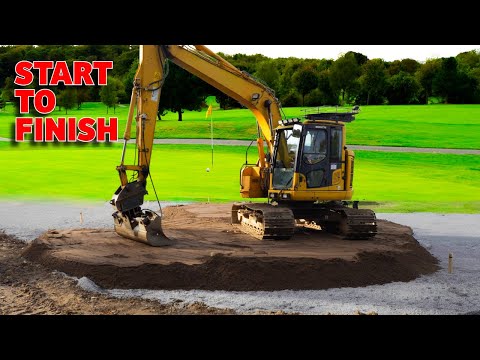
Video unavailable
This video can't be played right now.
The 5-Month Build: What It REALLY Takes to Build a USGA Golf Green
This is How a USGA Golf Green is Built – And It’s Incredible! Moasure is a game-changing measurement tool that makes measuring quick, easy, and super accurate. If you're interested in Moasure, head to my link https://moasu.re/PremierLawns to get a discount on your order. In this video, we take you through every step of the process, from removing the old green to installing a brand-new USGA-spec green. What You'll See: ✅ Old Green Removal – Lifting the turf off the old green and removing the thatch layer ✅ New Drainage Installation – Installing new drains ✅ Rootzone Sand Production – A visit to Irwins, where we see how the USGA sand mix is made ✅ New Rootzone Installation – Preparing the foundation for the perfect putting surface ✅ Turfing the Green – Laying down fresh turf and dealing with unexpected challenges ✅ Final Touches – How the green is perfected for play This is a fascinating look behind the scenes at how a professional golf green is built to USGA standards. Whether you're a golfer, a course manager, or just love seeing big projects come together, you won't want to miss this! The best place to get grass seed https://www.bostonseeds.com #ad #golfcourse #golf 0:00 - Introduction to the 10th green build at Clandeboye Golf Club 1:08 - Reviewing the architect's design 2:27 - Addressing shadow, sunlight, and airflow limitations on the site 3:40 - Outlining the elevation plans & redirecting runoff water 4:36 - Lifting 400 square metres of existing green turf with the "Wall Gang" volunteers 6:39 - Excavating the rootzone & exposing the underlying bedrock 7:36 - Pining and piping the old open stream to create a new runoff area 8:04 - Compacting the subsoil foundation layers 8:35 - Architect David Jones breaks down the USGA gravel and rootzone specs 9:34 - Initial shaping with the excavator & rock breaking the shelf 10:38 - Using laser-level technology to carve out the two-tier green profile 12:42 - Marking out the main center drain and herringbone laterals 13:57 - Bringing in the 6-10mm clean-cut stone for the drainage trenches 15:31 - How modern uniform grading has replaced traditional gravel choker layers 16:09 - Installing field connectors to prevent joint contamination 16:56 - Checking the root structure of the turf stored on plastic sheeting 18:55 - Spreading the 100mm uniform grit layer over the completed drains 19:16 - Preparing the 12-inch depth 70/30 master sand rootzone mix 20:07 - Swapping peat for sustainable green waste compost to protect carbon sinks 21:10 - Checking the final green platform & planning the forward pin positions 22:25 - Managing the surrounding slope drainage into the stream 23:18 - Moving to the yard to see how USGA rootzone sand is washed and manufactured 24:13 - Blending coarse and fine feedstocks to establish the correct matrix 24:42 - Sizing the sand and removing unwanted silts and clays via hydro-sizing 25:57 - Explaining the exact micron specifications for USGA sand particles 29:53 - Returning to the site to set straight turf 30:48 - White-lining the perimeter boundaries of the stone carpet 31:33 - Shaper updates on managing the sticky winter weather conditions 32:11 - Inspecting the stored turf banks for fusarium disease spots 32:53 - How longer surround grass traps dew and fuels disease growth 33:43 - Introducing the secondary tool-drain pipeline around the green edge 34:15 - Clearing extra trees to open up the visual aspect of the hole 35:12 - Hand-working the intricate bunker drainage system 35:25 - Using the Moasure tool to calculate the exact perimeter and area 37:13 - Explaining the Olympic Gold fine fescue and dwarf ryegrass collar layouts 38:35 - How to reshape a bunker floor to prevent heavy rain washouts 39:18 - Receiving the premium Arena Sport turf delivery from Tillers Turf 40:05 - Laying the 16mm fast-knitting ryegrass surround turf 41:01 - Levelling and setting the 11th competition tee box with the laser bucket 41:42 - Clearing scrub trees and Blackthorn bushes to restore the fairway line of sight 42:23 - Club Manager breakdown on improving hole navigation for visitors 43:03 - Turfing the banking and blending the mounds into the natural landscape 43:36 - Measuring the final interior perimeter boundaries for precision ordering 44:42 - Scalloping out hollows to guide surface water into hidden gully pots 46:06 - Assessing the heavy track damage caused by hauling 600 tonnes of material 47:32 - Reinstating the haul route with heavy stone and grass seed for spring 48:09 - Shaping out the final revetted bunker face 48:54 - Cutting the beach hedge down to expose the dog-leg angle 49:26 - Step-by-step breakdown of revetting bunker edges using old turf layers 50:46 - Installing a 50mm resin liner to prevent sand soil contamination 51:30 - Inspecting the completed stone wall built by club volunteers 52:03 - Five months later: The final inspection of the matured, ready-for-play green
Suggested videos

How to make your lawn LEVEL and Flat - Beginners Guide to lawn levelling
Premier Lawns · 9:25
Building a USGA Putting Green in 4 Minutes
United States Golf Association (USGA) · 4:01

NEW lawn from scratch in a DAY | The ultimate lawn renovation
Premier Lawns · 15:00

USGA greens construction video
Jason Pick · 22:04

How To Get a Thick, Green, Lush Lawn (Even If You’re a Total Beginner!)
Premier Lawns · 8:01

USGA Putting Green Construction Recommendations Explained
United States Golf Association (USGA) · 2:07

The ONE Thing Stopping You From Getting a Great Lawn
Premier Lawns · 9:49
USGA Putting Green Construction Recommendations - Subgrade
United States Golf Association (USGA) · 2:26

Stop! 5 Things That Will Make Your Lawn Worse After a Drought
Premier Lawns · 6:05
How I Built a Real Backyard Golf Green
Lawn Tips · 3:26:52

Get Your Lawn Ready for Winter Before It's Too Late
Premier Lawns · 8:29
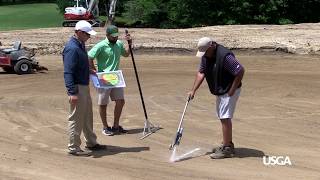
USGA Putting Green Construction Recommendations - Shaping The Green
United States Golf Association (USGA) · 1:39