
There Is No Celtic Gene. What Welsh and Cornish DNA Shows
The River Tamar at Gunnislake is not wide. On a still morning you could throw a stone from one bank to the other. In 2015 a team of geneticists fed 2,039 DNA profiles into a computer with no place names, no county lines and no history attached, and asked it to sort them. It drew a line at the Tamar anyway. This film is about that line, and about the second one, along the Welsh Marches. Ancestry is not identity, and nothing measured here decides who belongs anywhere. What follows is a measurement. The short version: the west of Britain is not different because anything was preserved there. It is different because the biggest later event in England's population history largely did not reach it. And there is no single Celtic genetic group to find. The Cornish do not cluster with the Welsh. They sit closer to Devon. In the film - The People of the British Isles study: 2,039 people whose four grandparents were born within 80 km (about 50 miles) of each other - Why Wales splits off before England separates from Scotland, and then splits again, north and south - The Tamar, where the Cornwall and Devon clusters meet almost exactly on a county line nobody told the computer about - The Beaker turnover about 4,500 years ago, and the quieter Bronze Age wave after it - Why 76 percent in early medieval English graves and 10 to 40 percent in modern DNA are both true - Cheddar Man, and why the ten percent you have read is not his ten percent - What did survive in the west: not blood, a language - The surnames: is yours on the list? If your family is Welsh, which county? If you are from the southwest, which side of the Tamar? And if your people left for America, Canada or Australia, which surname did they carry? Put it in the comments. I read them and I answer. If you want history built from the evidence up, subscribe. https://www.youtube.com/@TheHistoryHubs CHAPTERS 0:00 The river that drew itself 0:50 2,039 people and one instruction 2:34 Cornwall, Devon, and no Celtic cluster 4:10 Where the difference came from 6:11 What stopped at the Marches 7:45 Two famous numbers, both true 8:51 Is anything in the west older 11:27 What actually survived 12:55 Is your surname on this list? 14:38 Back to the river STUDIES AND SOURCES Leslie et al. 2015, Nature. The fine-scale genetic structure of the British population. Olalde et al. 2018, Nature. The Beaker phenomenon and the genomic transformation of northwest Europe. Patterson et al. 2022, Nature 601, pages 588 to 594. Large-scale migration into Britain during the Middle to Late Bronze Age. Gretzinger et al. 2022, Nature. The Anglo-Saxon migration and the formation of the early English gene pool. Cassidy et al. 2025, Nature. Iron Age Britain. Brace et al. 2019, Nature Ecology and Evolution. Population replacement in Early Neolithic Britain. Weale et al. 2002, Molecular Biology and Evolution 19(7), pages 1008 to 1021. Silva, Skoglund et al. 2026, bioRxiv. PREPRINT, NOT YET PEER REVIEWED. Census 2021, Welsh Government: 538,300 Welsh speakers, 17.8 percent. A note on the figures. 76 percent is a sample average from one set of early medieval graves, not a regional figure and not a figure about anyone alive. 10 to 40 percent is the modern range. The 2026 preprint counts people carrying detectable outside ancestry, not shares of ancestry. A note on the pictures. The maps and graphics are illustrations built for this film, not historical documents. Scenes of prehistoric, Roman and early medieval life are modern reenactments and stand for a period, not for a named place or event. CREDITS Photographs of rural Wales, 1870s to 1890s: John Thomas, National Library of Wales, public domain. Stock footage: Storyblocks. Map data: Natural Earth. Music from Epidemic Sound: Analyte, Michael Rothery. Etude No 1 For String Quartet, Peter Sandberg. Tvivel, Anna Dager and Hanna Ekstrom. Grounds, Static Glow Sounds. Cello Serenade No. 1, Anna Dager and Hanna Ekstrom. The Simplest Things, Gavin Luke. Sound effects from Epidemic Sound. Full picture credits are in the first comment. #WelshDNA #CelticDNA #Ancestry
Suggested videos
Scientists Have Revealed Who Has the Most Celtic DNA in Europe
Ancient Bloodlines · 28:53
The Azoreans Are Not Who You Think They Are (DNA Evidence)
The History Hub · 17:32
The Welsh Are Not English Or Irish: Their DNA Explains Why
Traced in the DNA · 26:16

How French Are Quebecers Really? What the DNA Says
The History Hub · 15:32
The Cornish Were Never Who We Thought — DNA Revealed Something Nobody Expected
Crownline Origins · 9:22
English, Scottish, Welsh, Irish: What DNA Actually Separates Them?
The History Hub · 16:06

The Celts Were Never What We Thought. The DNA Proves It
The Way Of Ireland · 10:18

Did Jesus Really Exist? A Historical Investigation
The History Hub · 19:07
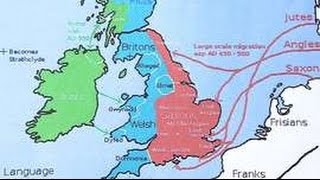
Survey finds there is no unique Celtic human gene
robin show · 1:45
Why Are the Portuguese Genetically Different from Spaniards?
The History Hub · 13:18
Who Really Has the Most Celtic DNA in Europe? The Surprising Truth
The Celtic Lens · 13:49
Skin Color Is a Survival Adaptation
The History Hub · 11:36