
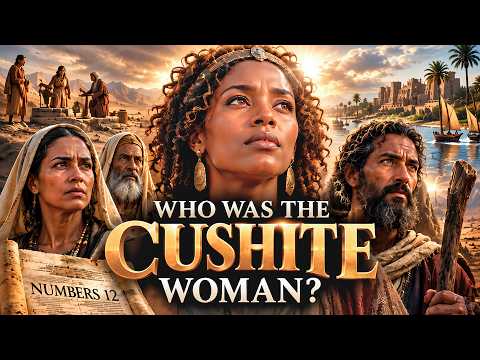
Video unavailable
This video can't be played right now.
Moses Married a Cushite Woman — Who Was She Really
Who was the mysterious Cushite woman Moses married in Numbers 12—and was she actually Zipporah or another woman from Africa? In this documentary, you’ll discover what Scripture actually says about Moses’ Cushite wife, the meaning of Cush, and why her identity remains one of the Bible’s most debated mysteries. Numbers 12 introduces an unnamed Cushite woman whose marriage to Moses becomes the opening issue in Miriam and Aaron’s confrontation with him. But Exodus already identifies Moses’ wife as Zipporah, a woman connected with Midian. So are they the same person—or did Moses marry another woman whose story the Torah never records? This documentary examines the biblical text, Zipporah’s story, the ancient geography of Cush and Nubia, the Cushan-Midian connection in Habakkuk, and later traditions about Moses and Ethiopia. We carefully separate what Scripture explicitly states from historical context and later interpretation, exploring both major theories without claiming certainty where the biblical text remains silent. CHAPTERS 00:00 The Woman the Bible Doesn’t Name 18:24 What Numbers 12 Actually Says 36:03 Zipporah: The Wife We Already Know 54:57 What Did “Cushite” Mean? 01:11:05 Theory One: She Was Zipporah 01:26:32 Theory Two: Another Woman from Cush 01:45:07 Which Theory Fits the Evidence Best? 02:03:10 The Woman Who Remained Unnamed MAIN BIBLICAL SOURCES Numbers 12:1–16 — Miriam, Aaron, Moses, and the Cushite woman Exodus 2:11–22 — Moses in Midian and his marriage to Zipporah Exodus 4:24–26 — Zipporah and the circumcision episode Exodus 18:1–6 — Zipporah and Moses’ sons return to him Habakkuk 3:7 — Cushan and Midian in poetic parallel Jeremiah 13:23 — Biblical reference to the appearance of a Cushite Jeremiah 38:7–13 — Ebed-Melech the Cushite INTERPRETATION NOTE Scripture explicitly calls the woman in Numbers 12 “Cushite,” but it does not name her or explicitly identify her as Zipporah or as a second wife. Identifying her with Zipporah, identifying her as another woman from African Cush, explaining Miriam’s motive as racial prejudice, or connecting her directly with later stories about Moses and an Ethiopian princess are interpretations or later traditions rather than explicit statements of Numbers 12. Ancient Cush should also not automatically be equated with the borders of modern Ethiopia. #Moses #Zipporah #CushiteWoman #BiblicalMysteries #BibleHistory
Suggested videos

What Happened to the CUSHITE WIFE of Moses 🎬 Her Fate Restored Full Movie 4K
Forgotten Bible Stories · 1:10:53

The African Presence in Scripture: What Most People Miss!
Street Apologist · 1:22:56

“Cush: The African Patriarch at the Dawn of Scripture | From Cush to Christ (Episode 1)”
Remnant Teachings · 6:01
Moses' Mysterious African Wife: Ethiopian Princess, Second Wife, or Zipporah?
The Bible in Black · 20:30

Charles Ross on the Hidden History of Jesus, Africa, America & the Bible
Ninety One Productions and Teacher Charles TV · 2:28:07
Moses Married a Cushite Woman — Who Was She Really
Africa in Scripture · 2:00:04

African Countries mentioned in Scripture
DECHAWN'S MUSINGS · 2:24
Moses’ Cushite Wife — The Story They Don’t
The Black Bible Narratives · 7:09

10-13-21 "Where Is Africa in Scripture" with Pastor Peter Curzon 7pm
Liberty Church Fairfield · 1:19:51

Why God PROTECTED Moses’ Cushite Wife? | Full Bible Movie 4K
Never Forsaken · 54:47
Africa in the Bible: The Myth of a Cursed Race (Part 1) | A Day of Discovery Legacy Series
Our Daily Bread Ministries · 26:04
MIRIAM: Why did God punish Moses' sister because of his ETHIOPIAN wife?
Bíblia Viva · 59:03