
Axial and Appendicular Skeleton- Dr. Jessica Guerrero
Dr. Jessica Guerrero 9th Edition Human Anatomy & Physiology 2401 Chapter 7 Marieb & Hoehn Happy Wife and Proud Mother of 6! Passionate Educator Professor of Biological Sciences Owner, World Changing Fitness Certified Master Trainer Life Coach and Mentor Axial: The skeletal system forms the rigid internal framework of the body. It consists of the bones, cartilages, and ligaments. Bones support the weight of the body, allow for body movements, and protect internal organs. Cartilage provides flexible strength and support for body structures such as the thoracic cage, the external ear, and the trachea and larynx. At joints of the body, cartilage can also unite adjacent bones or provide cushioning between them. Ligaments are the strong connective tissue bands that hold the bones at a moveable joint together and serve to prevent excessive movements of the joint that would result in injury. Providing movement of the skeleton are the muscles of the body, which are firmly attached to the skeleton via connective tissue structures called tendons. As muscles contract, they pull on the bones to produce movements of the body. Thus, without a skeleton, you would not be able to stand, run, or even feed yourself! Each bone of the body serves a particular function, and therefore bones vary in size, shape, and strength based on these functions. For example, the bones of the lower back and lower limb are thick and strong to support your body weight. Similarly, the size of a bony landmark that serves as a muscle attachment site on an individual bone is related to the strength of this muscle. Muscles can apply very strong pulling forces to the bones of the skeleton. To resist these forces, bones have enlarged bony landmarks at sites where powerful muscles attach. This means that not only the size of a bone, but also its shape, is related to its function. For this reason, the identification of bony landmarks is important during your study of the skeletal system. Bones are also dynamic organs that can modify their strength and thickness in response to changes in muscle strength or body weight. Thus, muscle attachment sites on bones will thicken if you begin a workout program that increases muscle strength. Similarly, the walls of weight-bearing bones will thicken if you gain body weight or begin pounding the pavement as part of a new running regimen. In contrast, a reduction in muscle strength or body weight will cause bones to become thinner. This may happen during a prolonged hospital stay, following limb immobilization in a cast, or going into the weightlessness of outer space. Even a change in diet, such as eating only soft food due to the loss of teeth, will result in a noticeable decrease in the size and thickness of the jaw bones (OpenStax, 2013). Appendicular: Your skeleton provides the internal supporting structure of the body. The adult axial skeleton consists of 80 bones that form the head and body trunk. Attached to this are the limbs, whose 126 bones constitute the appendicular skeleton. These bones are divided into two groups: the bones that are located within the limbs themselves, and the girdle bones that attach the limbs to the axial skeleton. The bones of the shoulder region form the pectoral girdle, which anchors the upper limb to the thoracic cage of the axial skeleton. The lower limb is attached to the vertebral column by the pelvic girdle. Because of our upright stance, different functional demands are placed upon the upper and lower limbs. Thus, the bones of the lower limbs are adapted for weight-bearing support and stability, as well as for body locomotion via walking or running. In contrast, our upper limbs are not required for these functions. Instead, our upper limbs are highly mobile and can be utilized for a wide variety of activities. The large range of upper limb movements, coupled with the ability to easily manipulate objects with our hands and opposable thumbs, has allowed humans to construct the modern world in which we live (OpenStax, 2013).
Suggested videos
The Human Body- Dr. Jessica Guerrero
Dr. Jessica Guerrero · 1:26:10
Quick Guidance on Muscle Naming- Dr. Jessica Guerrero
Dr. Jessica Guerrero · 20:37
Joints- Dr. Jessica Guerrero
Dr. Jessica Guerrero · 49:07

ANAT 260 Week 2 Quiz Review- Dr. Guerrero
Dr. Jessica Guerrero · 5:32
Endocrine System- Dr. Jessica Guerrero
Dr. Jessica Guerrero · 1:13:24
Chemistry and Biochemistry- Dr. Jessica Guerrero
Dr. Jessica Guerrero · 1:26:55
Muscle Anatomy & Physiology- Dr. Jessica Guerrero
Dr. Jessica Guerrero · 2:07:39
The Autonomic Nervous System- Dr. Jessica Guerrero
Dr. Jessica Guerrero · 41:09

Lymphatic System- Dr. Jessica Guerrero
Dr. Jessica Guerrero · 35:47
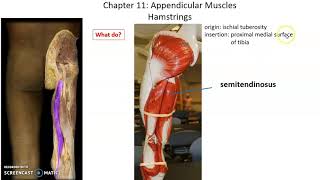
APHYS 34 A Chapter 11 Muscular System: Axial and Appendicular Muscles Part 5
adam majewski · 10:46

The Integumentary System (hair, skin, nails, and glands)- Dr. Jessica Guerrero
Dr. Jessica Guerrero · 1:24:27

Energy, Enzymes, and Biological Reactions- Dr. Jessica Guerrero
Dr. Jessica Guerrero · 1:18:07