
THE NEST MUSIC AI × HC - THE ODYSSEY - Ithaca “The Bow and the Dawn” (Visualizer)
Chapter VIII of THE ODYSSEY ITHACA — “THE BOW AND THE DAWN” Narrative Function This chapter is the return, the reckoning, and the rebirth. After storms, seductions, monsters, and years lost to longing, the warrior finally reaches the soil that shaped him. But Ithaca is not the same — and neither is he. Homecoming is not a reward; it is a trial of identity. To reclaim his place, he must prove not his strength, but his truth — the essence of who he has become through suffering, memory, and endurance. The bow becomes the symbol of this transformation: only the man who has carried the weight of the journey can draw it. And dawn becomes the moment when darkness breaks, not gently, but with revelation. Musical Architecture Instrumentation: Deep drums, heroic strings, male chorus, brass swells, rising percussion Tonality: Mixolydian and triumphant minor-to-major shifts — evoking return, justice, and awakening Rhythm: Steady, ascending, purposeful — like footsteps toward destiny Production: Wide cinematic layers, bold crescendos, radiant harmonic overtones Emotional Themes The cost of coming home Identity reclaimed through trial Justice as restoration, not vengeance The quiet strength of endurance Symbolism The Bow: Destiny that only the true self can wield The Dawn: Illumination after long darkness; the world seeing him again The Hall: A stage for truth, not violence Ithaca: The place where the journey ends and begins at once Lyric Function The lyrics rise like a ceremony of return — solemn, powerful, inevitable. The verses carry the weight of memory, while the chorus opens like sunrise, revealing the hero’s transformation. This is not a triumphant shout; it is a measured, earned victory, shaped by humility and clarity. The final lines echo the truth of the entire Odyssey: that home is not a place, but a self reclaimed through trial. Lyrics Verse 1 The shoreline rose in morning gold, A dream I carried through the cold. The fields I knew, the olive trees, Still whispered ancient memories. My heart beat wild, my breath grew thin— A wanderer returning skin. Yet in the hush before the dawn, I felt the man I’d once been drawn. Pre‑Chorus The world stood still, the sky held tight, As if it knew my name tonight. Chorus Oh, raise the bow against the dawn, For all the years of being gone. The string remembers who I am, A king returned from sea and sand. The sun breaks through, the shadows yawn— I claim my truth with bow and dawn. Verse 2 The hall was filled with borrowed pride, With men who fed on what I’d died. Their laughter echoed through the stone, A throne that once was mine alone. I drew the bow with steady breath, A line between their fate and death. The arrow flew, the world grew clear— A kingdom waking from its fear. Pre‑Chorus The dawn rose bright, the night withdrew, Revealing all I fought to do. Chorus Oh, raise the bow ... 🔥🛡️THE ODYSSEY is an eight‑part neo‑classical cinematic folk cycle that reframes Homer’s epic as an internal psychological journey rather than a historical narrative. Each track corresponds to a mythic episode, but the emphasis is on the emotional states these episodes symbolize: pride, temptation, rage, seduction, grief, desire, longing, and rebirth. The album functions as a structured progression through these states, forming a coherent arc of dissolution and re‑emergence. Musically, the work integrates acoustic instrumentation (legato cello, guitar, harp, frame drums) with male and female choral layers that act as an omnipresent mythic chorus. This choral presence provides continuity across the album, serving as the “voice of fate” or “collective memory” that shadows the protagonist’s journey. The production aesthetic is cinematic, atmospheric, and intentionally spacious, allowing each track to operate as a self‑contained emotional environment. Thematically, the album explores the tension between external events and internal transformation. Troy becomes the weight of identity; the Lotus‑Eaters represent the seduction of forgetting; the Cyclops embodies primal survival; Circe symbolizes the dissolution of self; the Underworld confronts unresolved memory; the Sirens expose desire; Calypso reveals the cost of comfort; and Ithaca becomes the moment of self‑recognition. The mythic narrative is preserved, but its function is symbolic rather than literal. Structurally, the album is designed as a closed emotional loop: a descent into fragmentation followed by a gradual reassembly of the self. The final track, “The Bow and the Dawn,” resolves the arc not through triumph but through clarity — the return to identity after enduring the full spectrum of human experience. Visually and sonically, THE ODYSSEY positions itself at the intersection of ancient myth and modern cinematic minimalism. It is not a retelling of Homer’s text; it is a contemporary re‑interpretation of the Odyssey as a universal psychological journey — one that every listener can map onto their own life.
Suggested videos
If I Break, Let It Be Into You
THE NEST MUSIC AI × Human Collaboration · 3:58
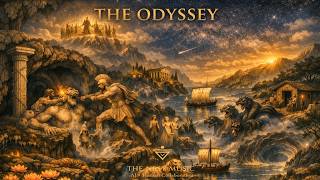
THE NEST MUSIC AI × HC - THE ODYSSEY (Visualizer)
THE NEST MUSIC AI × Human Collaboration · 7:33
Where the Pulse Begins
THE NEST MUSIC AI × Human Collaboration · 2:48
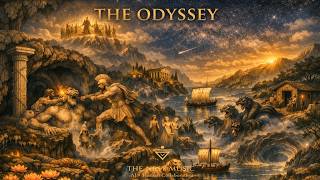
THE NEST MUSIC AI × HC - THE ODYSSEY - Troy - Departure “The Smoke Still Rising” (Visualizer)
THE NEST MUSIC AI × Human Collaboration · 6:09
Echoes in Delay
THE NEST MUSIC AI × Human Collaboration · 4:10
THE NEST MUSIC AI × HC - THE ODYSSEY - Circe “The Island of Voices” (Visualizer)
THE NEST MUSIC AI × Human Collaboration · 5:25
Axis of Becoming
THE NEST MUSIC AI × Human Collaboration · 6:00

THE NEST MUSIC AI × HC - THE ODYSSEY - Calypso “Seven Years of Blue” (Visualizer)
THE NEST MUSIC AI × Human Collaboration · 5:06

She Lives On Love And Little Things
THE NEST MUSIC AI × Human Collaboration · 3:30
THE NEST MUSIC AI × HC - THE ODYSSEY - Sirens “The Song That Breaks Men” (Visualizer)
THE NEST MUSIC AI × Human Collaboration · 5:05
The Pulse That Isn't There
THE NEST MUSIC AI × Human Collaboration · 3:37
THE NEST MUSIC AI × HC - THE ODYSSEY - Cyclops “One-Eyed Night” (Visualizer)
THE NEST MUSIC AI × Human Collaboration · 5:05