
Video unavailable
This video can't be played right now.
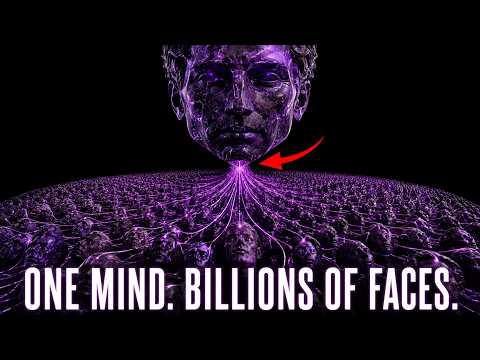
Every Conscious Mind Is the Exact Same Observer | Quantum Physics Documentary
This documentary examines quantum monism — the claim that all observers are one — through the Reeh–Schlieder theorem in QFT, Max Tegmark’s 10^-20 s brain decoherence estimates, and instrument constraints from LIGO/LISA Pathfinder/IGEX, set against the Wheeler–DeWitt equation Ĥψ=0 and the Tsirelson bound 2.828. It follows the physics from John Archibald Wheeler’s “one-electron” intuition to modern algebraic QFT, then tests how far global entanglement reaches once decoherence, causality, and laboratory limits are accounted for. Along the way it weighs three live interpretations — quantum monism, QBism, and relational quantum mechanics — against no‑go theorems (Frauchiger–Renner; Brukner’s Local Friendliness) and the record-setting matter‑wave interference of massive molecules in Vienna. The goal is not hype but clarity: what the equations and experiments actually fix about “the observer,” and what remains interpretive. We start with indistinguishability and field ontology: electrons are excitations of one Dirac field, not labeled objects, as Dirac and Heisenberg formalized. Haag’s theorem then breaks naive “free vs interacting” unitarity, motivating algebraic methods where the Reeh–Schlieder theorem shows local algebras are type III and the vacuum is cyclic and separating — there is no clean factorization into “here” and “there.” Summers and Werner prove the vacuum maximally violates CHSH up to 2√2; Reznik shows its entanglement can be harvested by local detectors. But Tegmark’s calculations put brain‑scale coherence at ~10^-13 to 10^-20 s, far shorter than neural dynamics (10^-3 to 10^-1 s), so macroscopic cognition runs classically. The boundary you feel is not in the field; it is an emergent cutoff in correlation length set by rapid decoherence. With “observer” defined operationally as a system that records outcomes, the field’s unity does not automatically produce one perspective. Competing interpretations draw different lines: quantum monism (Schaffer; Päs) takes the universal state as ontologically primary; QBism (Fuchs, Mermin, Schack) treats states as personal probabilities; relational QM (Rovelli; Adlam) makes facts observer‑relative with cross‑perspective links. No‑go results sharpen the stakes. Frauchiger–Renner show that universal quantum theory plus single outcomes plus shared reasoning yields contradictions for nested observers; Brukner’s Local Friendliness bound — violated in photonic tests by Kok‑Wei Bong’s team — shows locality, absolute facts, and free choice cannot all hold. The cleanest takeaway is not “one observer,” but that observer‑independent facts are unsafe. Time itself can be emergent: Page–Wootters derive relational time from Ĥψ=0 by conditioning on a clock subsystem; experiments with entangled photons (Giovannetti, Moreva, Genovese) demonstrate the mechanism in miniature. Yet this still requires subsystems, and the global non‑factorization from Reeh–Schlieder limits how far such splits can be pushed. What’s covered in this video: Mentioned in this video: quantum monism, Reeh–Schlieder theorem, algebraic quantum field theory, Haag’s theorem, indistinguishability, John Archibald Wheeler, Richard Feynman, Paul Dirac, Werner Heisenberg, Edward Witten, Summers–Werner, Benni Reznik, CHSH inequality, Tsirelson bound, Max Tegmark, decoherence time, observer, Carlo Rovelli, Emily Adlam, QBism, Christopher Fuchs, N. David Mermin, Rüdiger Schack, Frauchiger–Renner, Časlav Brukner, Local Friendliness, Kok‑Wei Bong, Wheeler–DeWitt equation, Page–Wootters mechanism, Vittorio Giovannetti, Ekaterina Moreva, Marco Genovese, GRW, CSL, Stephen (Philip) Adler, Angelo Bassi, IGEX, LISA Pathfinder, LIGO, Talbot–Lau interferometer, Markus Arndt, oligoporphyrins, Dirac field, Higgs field, Noether current, Michelson–Morley, special relativity, microcausality, no‑signaling, Hawking radiation, black hole information paradox, Page curve, replica trick, ontic structural realism, Steven French, James Ladyman, David Wallace, David Deutsch, Adrian Kent, Tim Maudlin, Everett interpretation, Born rule. --- 0:00 Intro 0:02:57 Wheeler’s one‑electron idea 0:05:05 Fields and indistinguishability 0:07:56 Haag’s theorem 0:10:25 Reeh–Schlieder theorem 0:13:23 Vacuum Bell violations 0:16:29 Brain decoherence limits 0:21:02 Defining an observer 0:23:51 Three interpretations 0:30:02 Frauchiger–Renner, Brukner 0:35:29 Time from entanglement 0:40:11 Objective collapse (CSL) 0:44:58 25k‑Dalton interference 0:50:15 Structural realism 0:53:10 Born rule and Everett 1:04:09 Relativity and no‑signaling 1:09:44 Ontic vs operational split 1:16:52 What’s firmly established 1:19:25 Symmetry explains sameness 1:37:10 Patterns and thermodynamics 1:45:06 Measurement problem redux 1:49:23 Collapse tests, open bounds 1:56:06 Quantum gravity, timelessness 1:58:30 Final synthesis
Suggested videos
Why Scientists Are Starting To Believe Spacetime Is Not Fundamental
Joe's Space Science · 2:31:13
The Future Already Exists, But The Passage Of Time Does Not
Joe's Space Science · 2:19:25
The Person Sitting Next to You Is Not in the Same World as You | Quantum Investigation
Joe's Space Science · 2:15:29
Why the Geometry of Space Allows Infinite Time Loops | Theoretical Physics Documentary
Joe's Space Science · 2:00:49
Why Scientists Are Terrified By The "Vacuum Catastrophe" Calculation
Joe's Space Science · 2:31:53
Civilization Is a Single Mind Split Into Billions… or? | Quantum Physics Documentary
Joe's Space Science · 1:55:38
Why Black Holes Are Not Actually Black, Nor Are They Holes
Joe's Space Science · 1:32:23
Reality Is Selected by an Evolutionary Quantum Trap | Quantum Physics Documentary
Joe's Space Science · 1:51:14