
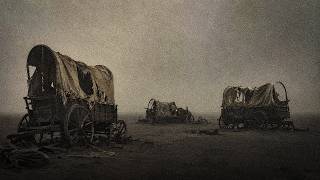
The Horrors of the American Frontier
My book, The Times You Grew Up With, takes you back: https://paulmcallister.store Between 1860 and 1890, the United States destroyed the largest animal population on the continent to break the independence of the Plains Indians. Somewhere between thirty and sixty million buffalo were reduced to fewer than a thousand. It was not an accident. Generals Sherman and Sheridan, veterans of the Civil War’s scorched-earth campaigns, understood that the buffalo was the economy of the Lakota, Comanche, Cheyenne, and every other nation on the Great Plains — food, shelter, fuel, trade, and spiritual life, all built on a single animal. Destroy the buffalo, and you wouldn’t need to win the war on the battlefield. You just needed to wait. This is the full story of the Plains Indian Wars — from the broken treaties at Fort Laramie to the massacre at Sand Creek, Red Cloud’s extraordinary military victory, Custer’s Last Stand at the Little Bighorn, the industrial-scale buffalo slaughter that turned Dodge City into a boomtown, Chief Joseph’s thirteen-hundred-mile fighting retreat, the horrors of the reservation system and the boarding schools, the Dawes Act land grab that took ninety million acres, and the final tragedy at Wounded Knee Creek in December 1890. Dollar figures, exposed strategies, named decisions, and consequences that are still unresolved — including a billion-dollar settlement the Lakota have refused to accept. Sources: Smits, David D. “The Frontier Army and the Destruction of the Buffalo: 1865–1883.” Western Historical Quarterly, Vol. 25, No. 3 (Autumn 1994). Hornaday, William T. The Extermination of the American Bison. Smithsonian Institution, 1889. Mooney, James. The Ghost-Dance Religion and the Sioux Outbreak of 1890. Fourteenth Annual Report of the Bureau of Ethnology, Smithsonian Institution, 1896. National Park Service. Sand Creek Massacre National Historic Site; Little Bighorn Battlefield National Monument; official historical documentation and battle records. Monnett, John H. Eyewitness to the Fetterman Fight: Indian Views. University of Oklahoma Press, 2017. Office of Indian Affairs Annual Reports, 1880–1895. U.S. Department of the Interior. National Archives, Record Group 75.
Suggested videos
The Most Impossible Rise of a City Ever: Wichita
Paul McAllister · 58:52

Why Nobody Remembers America's Richest Casino Town Anymore
Paul McAllister · 57:53
Why Nobody Wants to Visit Stowe, Vermont
Paul McAllister · 58:04
The Rise and Fall of America's Most Lawless Gold Rush City: Bodie, California
Paul McAllister · 36:09

The Most Impossible Rise of a Company Ever: Betty Crocker
Paul McAllister · 55:58

Why the Town Behind America's Best Beach Is Half Empty
Paul McAllister · 56:06
The Horrors of the Oil Rush
Paul McAllister · 53:34
The Horrors of the Oregon Trail
Paul McAllister · 55:13